
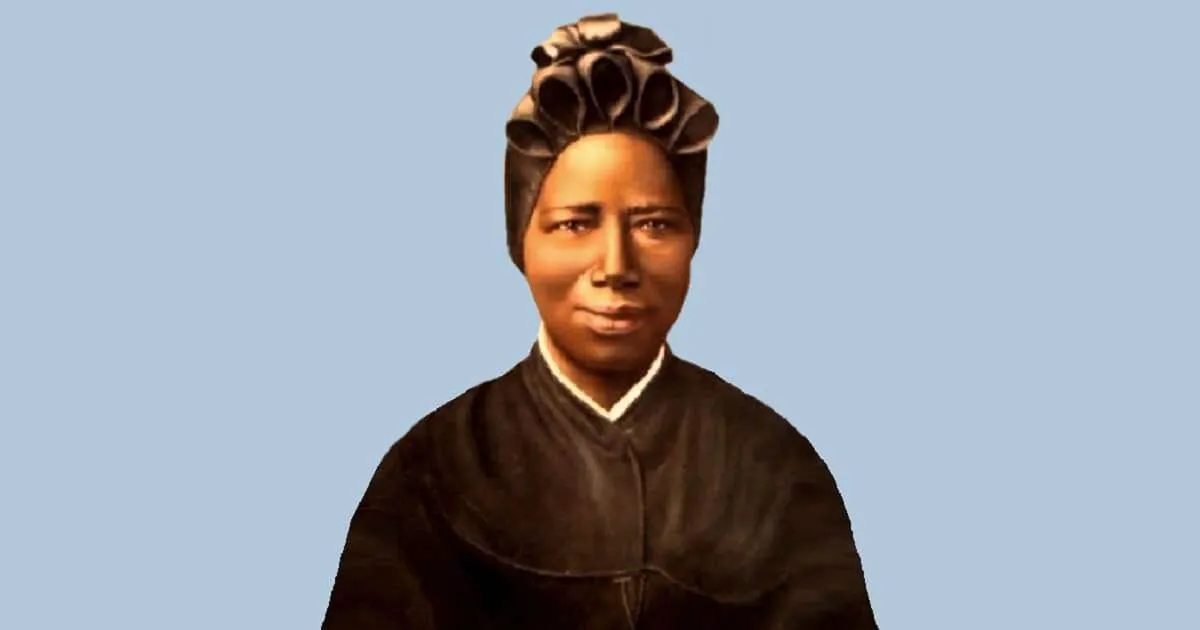
The Girl with No Name: Resilience, Slavery, and the Soul of Sudan
They beat her name right out of her.
This concept is nearly impossible to grasp from our modern, connected world. The thought, the idea of a person being so thoroughly broken by trauma that the very word used to identify them – their name since birth – slips into a mental fog of survival. For a seven-year-old girl in the Darfur region of Sudan in the 1870s, this wasn’t a metaphor. It was a physical, agonizing reality.
Can you imagine being seven years old, playing in the doting warmth of your family home, only to be ripped from your mother’s arms by Arab slave raiders? The horror of realizing that you will never again see your father’s gaze, never again intertwine fingers with your brothers, or share the secret laughter of your sisters, is a grief that should be ancient history. Yet, for the people of Sudan and what is now South Sudan, this story is both 150 years old and as fresh as this morning’s news.
A Land Defined by Shadows
The word Sudan comes from the Arabic Bilad as-Sudan, meaning “Land of the Black People.” It is a region with a history as deep as the Nile itself. This area was home to prehistoric relics dating back 50,000 years and the ancient, gold-rich Kingdom of Kush. However, for centuries, this land has been viewed by outsiders not as a cradle of civilization, but as a source of natural resources – human lives.
In 1821, the Ottoman Egyptian ruler Mohammed Ali invaded Sudan with a specific, cruel directive: to search for slaves. This oppressive “Turkiyya” rule devastated southern Sudan. This was the world into which a young girl was born in 1869. She was part of a prosperous family in the village of Olgossa; her father was the brother of a village chief, and she grew up surrounded by three brothers and three sisters.
The walls of her home were filled with love, but the world outside was a hunting ground. When she was just five, raiders stole her sister. Two years later, they came for her.
The 600-Mile Walk into Silence
The marauders dragged her from her home and forced her to walk barefoot for 600 miles to El Obeid, the grim epicenter of the Sudanese slave trade. For a child, 600 miles is not just a distance; it is an eternity of hot sand, sharp rocks, and the mounting realization that your previous life is fading away.
She was bought and sold twice during this journey. The trauma performed a kind of psychic surgery on her. When her captors demanded her name, she could not answer. Her mind had retreated to a place where words didn’t exist. Seeing her silence, her abusers mockingly called her Bakhita, the Arabic word for “fortunate.”
The irony was as sharp as the knives used to brand her. Over the next twelve years, Bakhita was sold and resold into different rounds of torturous captivity. She was demeaned, denied her humanity, and physically damaged. One of her owners, a Turkish general, practiced ritualistic cruelty. He scarred her with tattoos, a process involving 144 intricate cuts across her chest, back, and arms. Then they rubbed them with salt to ensure the scars remained permanently. She was recklessly tortured to within an inch of her life, once left unable to walk for a month after a particularly savage fury from her master’s family.
The Spirit of a New Nation
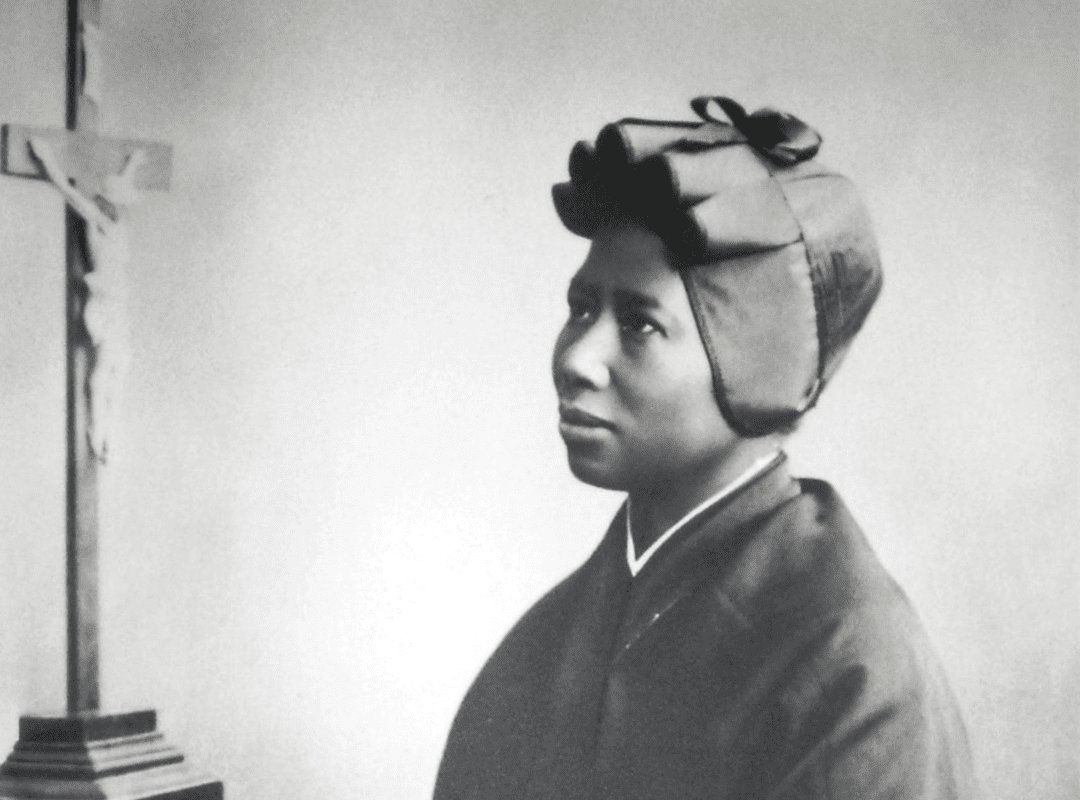
To understand Bakhita is to understand the spirit of South Sudan – the world’s youngest nation. Marred by decades of civil war, droughts, and famine, South Sudan finally achieved independence in 2011 after 99 percent of the population voted to break away from the north and endured a protracted and bloody battle.
Yet, the “waiting and wondering” that Bakhita endured remains a reality for children there today. Even in 2026, the region is haunted by conflict. Support agencies struggle to provide aid as staff are kidnapped and storehouses are ransacked. Perhaps most horrifyingly, children are still conscripted into wars, sometimes used as human mine detectors. The “Land of the Black People” remains a place where endurance is not a choice, but a requirement for existence.
Bakhita’s story, however, takes a turn that moves from the depths of outrage to the heights of inspiration. In 1883, she was sold in Khartoum to the Italian Vice Consul, Callisto Legnani. For the first time in over a decade, she was not met with a whip or a blade. When the political climate in Sudan turned violent during the Mahdist War, Legnani took Bakhita to Italy.
The Power of the Release
In the quiet of Italy, the girl who had been branded “fortunate” as a joke finally found the literal meaning of the word. Entrusted to the care of the Canossian Sisters in Venice, she was introduced to a concept she had never known: a “Master” who did not lash her but loved her.
It is here that Bakhita’s story transcends mere survival and becomes a lesson in the human ability to forgive. On January 9, 1890, she was baptized with the name Josephine Margaret Fortunata. She didn’t just find a new name; she found a new identity that the raiders could never reach.
The religious aspect of her life was not a retreat from her past, but a total reclamation of it. She famously said, “If I were to meet those slave raiders that abducted me and those who tortured me, I’d kneel down to them to kiss their hands, because if it had not been for them, I would not have become a Christian and religious woman.”
This is not the sentiment of a victim; it is the declaration of a woman who has achieved a complete victory over her oppressors. By refusing to carry the weight of hatred, she ensured that her abusers no longer had power over her. She spent the next 50 years of her life in Schio, Italy, serving as a cook, a sacristan for Mass, and a portress (gatekeeper). Her gentleness and ever-present smile became so legendary that when she passed away in 1947, thousands flocked to her funeral.
A Legacy of Hope and Empowerment
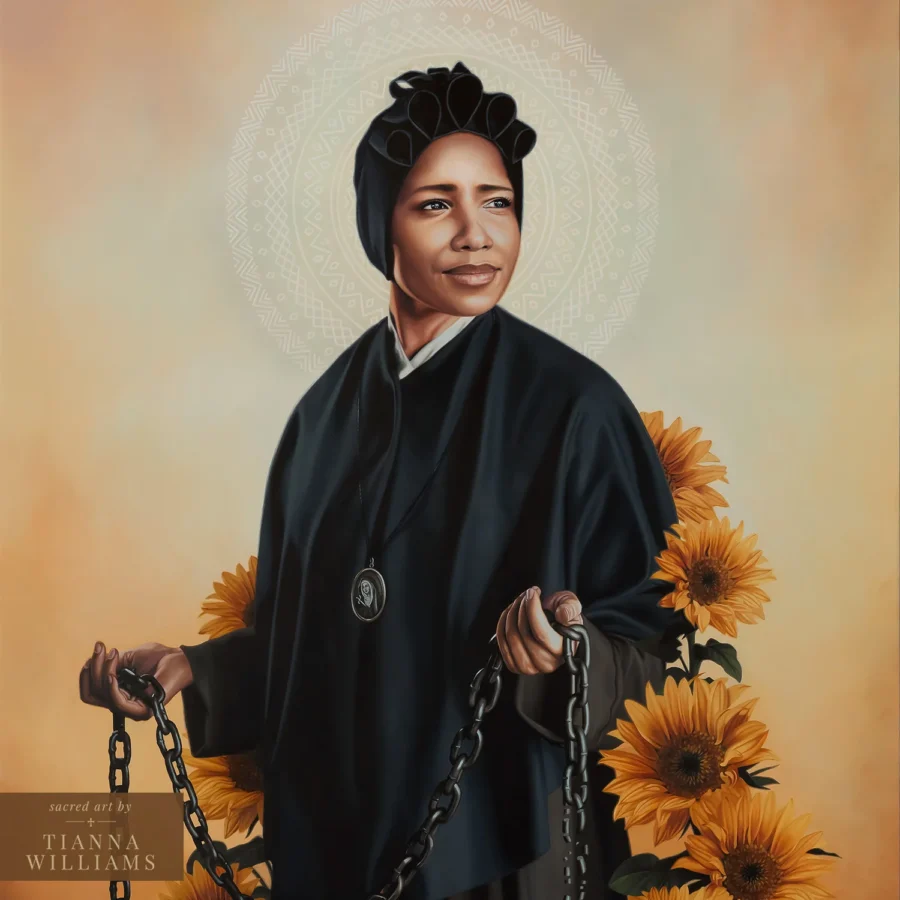
Bakhita walked with beauty in a body bearing 144 physical scars. She proved that while the world can steal your name, your freedom, and your family, it cannot steal the soul unless you allow it.
Today, St. Josephine Bakhita is the patron saint of Sudan and victims of human trafficking. She stands as a national treasure for a people who have known very little stability. Her life encapsulates the work of modern volunteers and partners who fight every day to help the people of South Sudan achieve a life of empowerment.
Partners and volunteers continue the fight today to liberate those who are still captive to oppression. According to the United Nations’ International Labor Organization, modern slavery – including forced labor, sexual exploitation and forced marriage – affects an estimated 50 million people in today’s world.
Further, the chaos of wars, violence, and conflict create situations that are rife for preying on the vulnerable – displacing women and children, creating refugees and orphans. According to research conducted by the Arise Foundation, trafficking occurs in 90% of wars and armed conflicts.
Conflicts like Sudan’s nearly three-year civil war (a present and ongoing conflict that continues to devastate families and communities today) breed environments that foment greater instances of child slavery, conscription into militias, and girls forcibly taken as “wives” or other forms of human slavery.
Non-profits like Sudan Relief Fund have fought among some of the most inhospitable conditions to bring food, clean water, clothing, shelter, health care and help for vulnerable children and orphans to Sudan and South Sudan, and they continue this fight today.
Whether enslaved to militias, human trafficking, or the oppression of extreme poverty, Sudan Relief Fund has been laying the groundwork for sustainable solutions and holistically transforming lives from despair to hope for nearly three decades – breaking the cycle of poverty that gives rise to instability, and empowering children through education and opportunity to achieve better futures.
Help fight poverty by helping young kids with education opportunities.