Refugee Kits for those Starving in the Sudan

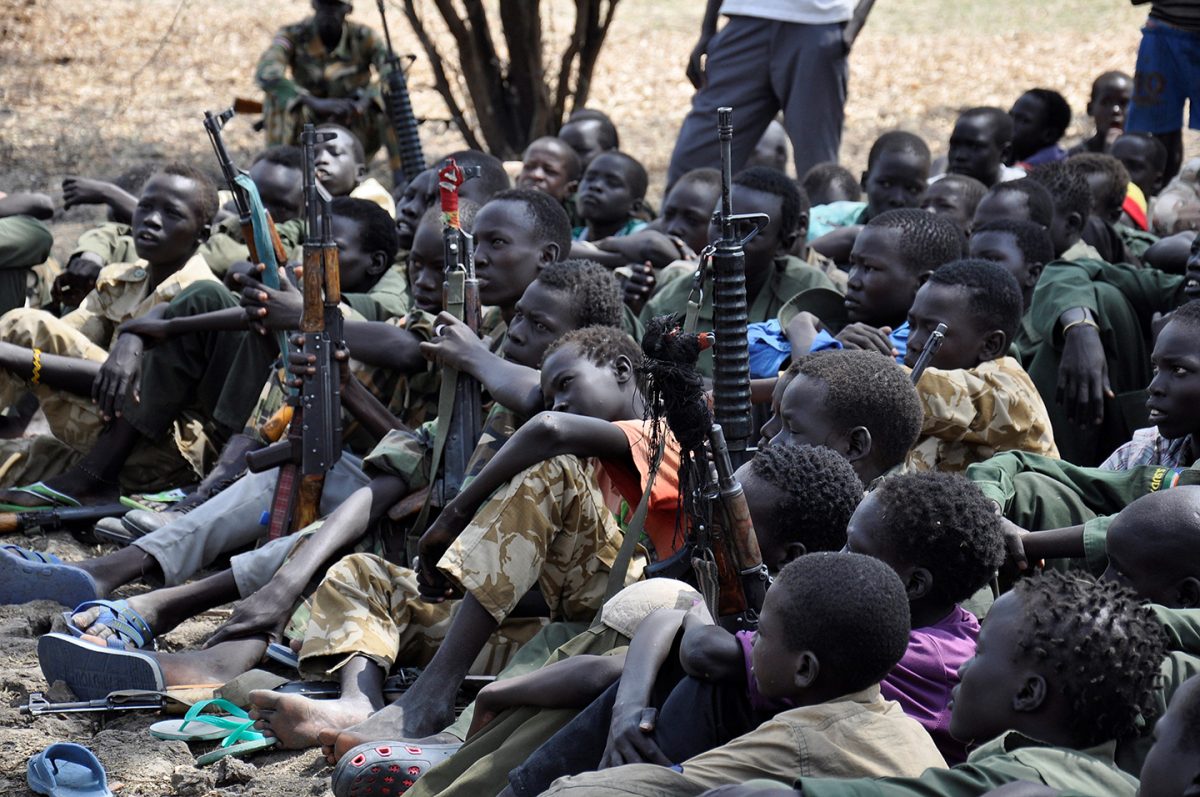
Three years of civil war have brought the nation of South Sudan and its people to their knees. An estimated 50,000 people have been killed in the five years since the new nation of South Sudan was born. Countless numbers have been displaced. And more than 3 million are starving.

Soldiers have recently raided houses throughout the country in places like Wau and taken seeds away from people on the verge of starvation. It is a very tense situation. Because of security concerns, hardly anyone can cultivate. Brother Bernhard Hengl, of the Combine Missionaries, claims “A terrible famine will happen this year!”

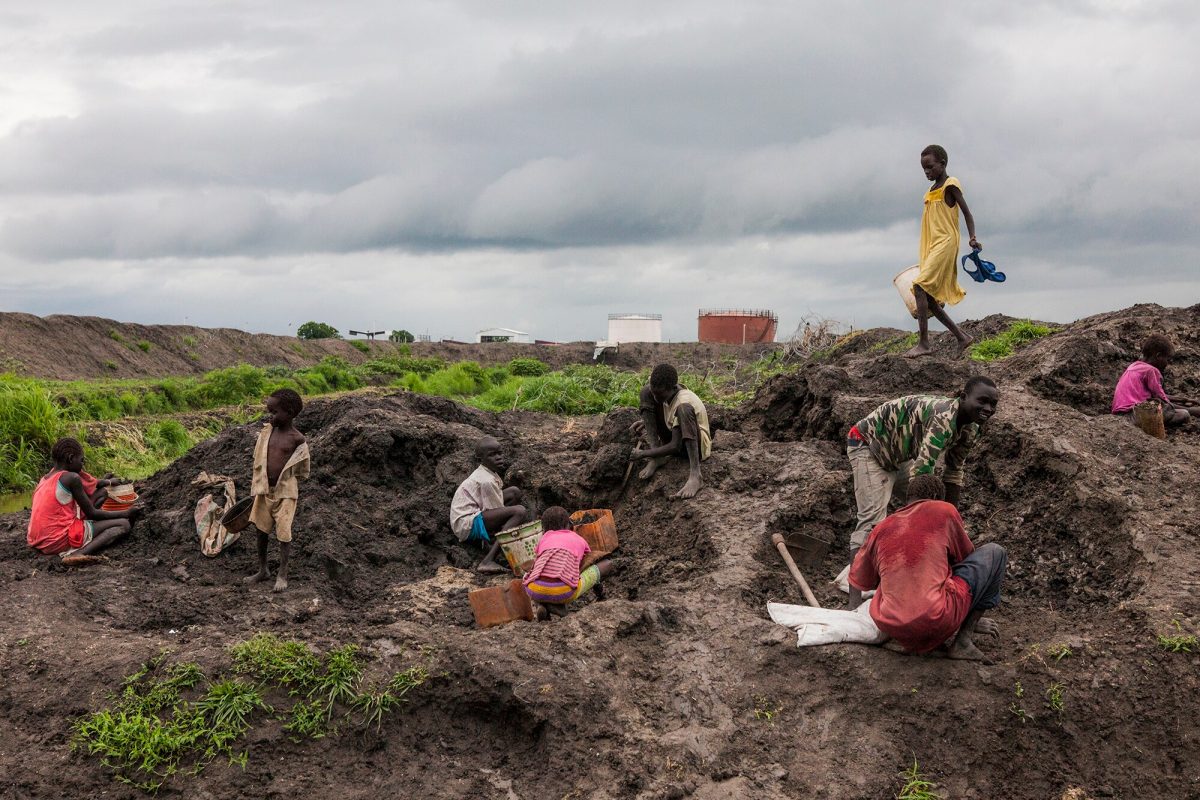
Many people have lost everything. Villages and crops have been burned, and countless people have been forced to flee and hide in the bush. Here, they survive on twigs, leaves and water lilies. This, in spite of the fact that South Sudan should be a very fertile country. The Nile runs through South Sudan, and provides plenty of opportunity for cultivation. “South Sudan should be a country full of hope four years after gaining independence. Instead, it’s now in the grip of a massive, man-made humanitarian crisis.”

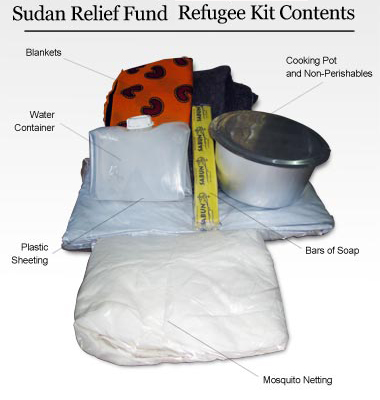
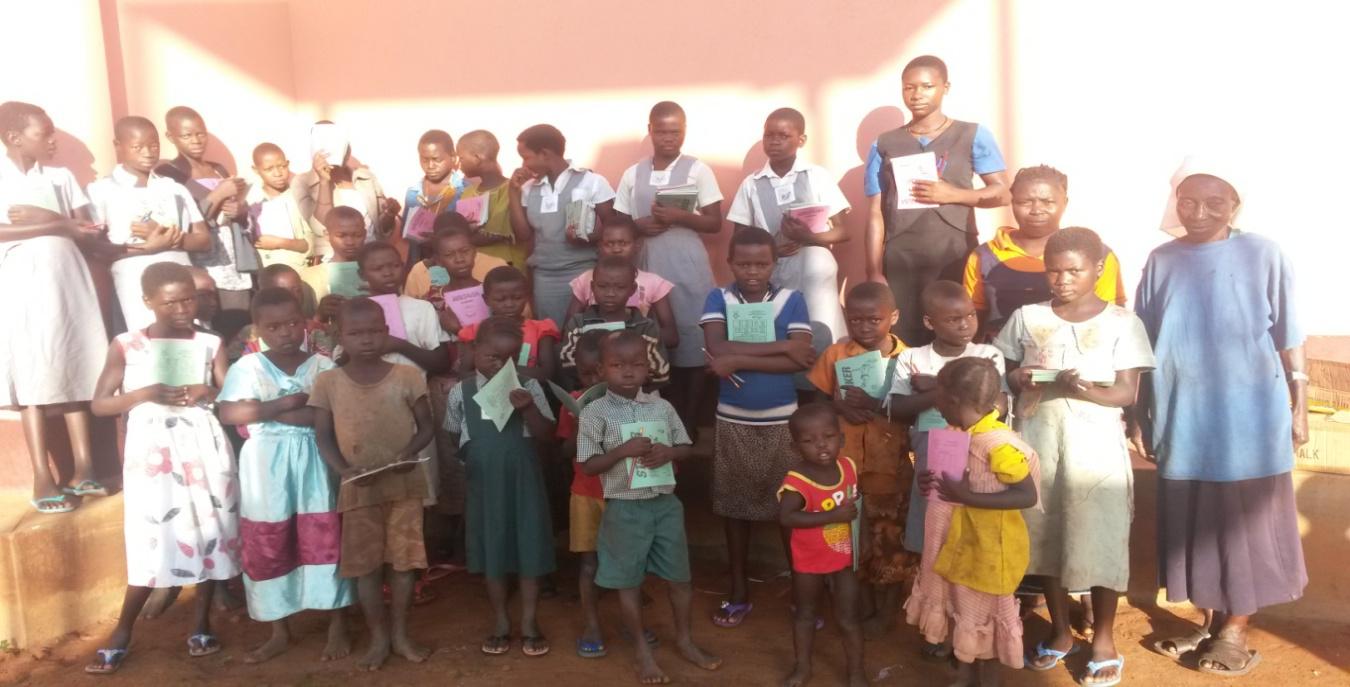
Thanks to the support of our generous donors we are one of the few organizations that have remained in South Sudan. 1 of every 5 people in South Sudan have been displaced. A major initiative of ours has been delivering refugee kits to the people on the ground. Each kit contains a cooking pot, four plates, four mugs, four spoons, one cooking spoon, two sauce pans, one knife and a carton to pack it all in. Along with the refugee kits, we have also continued delivering sorghum and other food staples to the displaced.

The Sudan Relief Fund has served the people of the Sudan for 17 years. We’ve been bringing water, food, shelter, and the message of Christ’s love to the people of South Sudan. We’ve drilled bore wells, provided medical supplies, built schools, and trained teachers and catechists. And have provided what shelter we could for a generation of South Sudanese displaced by war.

But, because of the crisis happening right now, we’ve concentrated our efforts on delivering food and refugee kits. These kits have proven essential for so many displaced people. Without it, many would not be able to survive. This is a catastrophic crisis unlike any seen since North Sudan’s genocide against the people in neighboring Darfur.

Click here for a video of Dr. Tom explaining the importance of these refugee kits. Dr. Tom Catena, as many of you know, has been serving the people of the Sudan in the Nuba Mountains for almost ten years. He is the lone doctor at the Mother of Mercy Hospital that serves people throughout the region.

If you would like to help us deliver refugee kits, please click here.

Report on Orphans of South Sudan Project

The number of orphans in South Sudan has risen dramatically over the last several years. In response to this, and thanks to our generous donors, The Sudan Relief Fund has been supporting The Welfare Support to Orphans and Vulnerable Children Project. The project was designed to address the daily and important needs of the 56 children staying at the Orphanage in Tombura. It was begun in August 2014 and has changed the lives of the orphans forever.

Due to instability in South Sudan food, security and medical costs have been skyrocketing at the orphanage. We have helped secure part of the orphanage with chain link fence to provide the children security. We provide funding for food and medicines so that the children are assured of daily meals.

There are five categories of aid that the orphans need and that we are able to provide thanks to our donors:

1. Monthly Feeding Costs

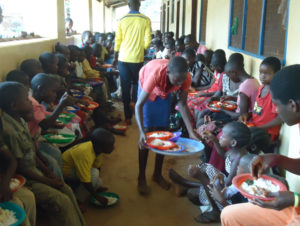
We have sent money to feed the orphans. The children used to eat once or twice a day, but now through the SRF support they are having three meals a day. The children were also forced to cook for themselves, both before and after school, but now a cook has been hired with a little incentive paid to her from the monthly feeding budget. This has saved the children the burden of coming back from school late in the evenings and having to start cooking.


2. School Fees

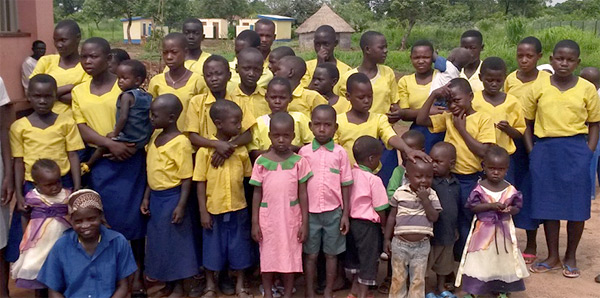
The fees for school were also quite prohibitive for the orphans. We at the Sudan Relief Fund realize the next generation of South Sudan must have an education to help their country. Therefore we are paying the school fees for the children at the orphanage . Uniforms were bought and other school materials like books, pens, papers, etc were also provided for all the children attending school.

3. Medical Costs

All outstanding medical bills for the Orphanage in Tombura were paid by September 2014. Thanks to Sudan Relief Fund’s generous donors we have been able to pay for any ongoing medical cost for the children or staff at the Orphanage.

4. Solar and battery power Installation

Two batteries, an inverter, and a controller have been installed to provide light to the main building at the orphanage. Two solar panels were connected to charge the batteries and provide light to the children. This will both improve their performance in school and provide better security.

5. Other basic necessities for the Orphans

The Orphanage had been missing many household items before this project. Since its inception, the SRF funded project has enabled the orphanage to purchase many important house items like Chairs, Benches, Iron boxes, bags, shoes, clothing and many other staples.


Conflict forcing many innocent people to flee

Despite attempts at peace, the situation in South Sudan is still tense, and people fear a famine. Brother Bernhard Hengl, of the Combine Missionaries, claims “A terrible famine will happen this year!”. Br. Bernard has been on ground zero in the Sudan for several years, and has witnessed, first hand, the terrible violence throughout the country.

Places like Wau are very, very tense, he says. In February, soldiers were shooting and looting, even conducting house to house raids. Soldiers went so far as to take seeds from the people, thereby making cultivation nearly impossible, and a man-made famine very possible. He knows other threats continue, and does what he can to get supplies and services to the people while he still can. “We were trying to assist with some food during the last months. We need to get means to assist further, as people are dying in great numbers of hunger and sicknesses.”

The warring parties were government sponsored soldiers and opposition forces. The conflict between the two happened despite the recent cease fire.

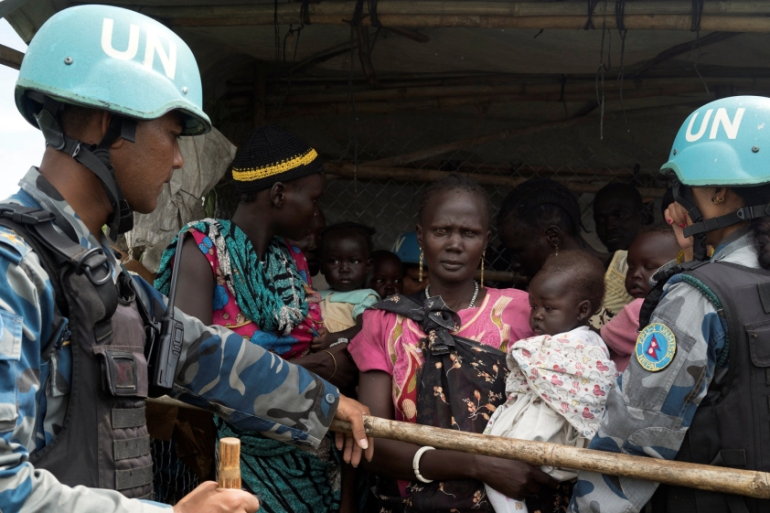
Many innocent people, perhaps over 90,000 from Wau alone, have been forced to flee, and hide in the bush, and in mosquito-infested swamps. There they are forced in sleep in open fields and under trees. Recently, the Sudan Relief Fund was able to send some much needed blankets to the people, but more needs to be done.

Many of the people who have fled are young children, who are now without parents.

More violence seems likely in the coming months, and as mentioned above, a possible famine is is looming.

All is not lost though, parties are working towards peace, and many organizations are doing what they can to help the people. Prayers are, of course, desperately needed.

EU URGES SOUTH SUDAN TO IMPLEMENT SECURITY DEAL TO STOP FAMINE

Security Deal Needed to Stop Famine

By William Davison

The European Union’s top envoy in the Horn of Africa urged South Sudan’s warring parties to implement a security deal to enable humanitarian agencies to provide aid to more than 1 million people facing famine.

A deal agreed on Aug. 25 is “critical” to stabilizing the country eight months after fighting began, Alexander Rondos said in a phone interview yesterday from the Kenyan capital, Nairobi. The accord sets out measures government and rebel forces should take, including disengaging from combat areas and reporting troop positions to regional monitors, and is a step toward respecting a cease-fire agreed in January that has been repeatedly flouted.

“It’s action on the ground on the security front that has to occur,” Rondos said. “With this we need to see immediate implementation and this is entirely in the hands of the South Sudanese parties.”

Fighting erupted in South Sudan in December when President Salva Kiir accused his former vice president, Riek Machar, and other senior government officials of plotting a coup, a charge they deny. The conflict in the oil-producing nation forced at least 1.5 million people to flee their homes and left the country on the brink of famine that may kill 50,000 children, according to the United Nations.

About 102,000 displaced people are sheltering at 10 UN bases, the highest number since the conflict began, according to the world body.

The mandate of a 12,500-strong UN mission may have to be strengthened to allow peace-keepers to push back armed groups threatening to attack, Rondos, the E.U.’s special representative to the Horn of Africa, said. The operation’s role was shifted in May from nation building to protecting civilians and a Protection Force of East African troops was announced in March.

Strengthening Capacity

“We need to see whether under present circumstances the mandate and rules of engagement they have at their disposal are equal to the challenge,” he said. “There’s going to be have to be strengthening of the enforcement capacity if it’s clear that persuasion has to give way to enforcement.”

Conflict mediators from the Intergovernmental Authority on Development, a seven-nation East African bloc, said they expect the step-by-step plan to mean “the guns will be silenced and the senseless conflict in South Sudan will end,” according to an Aug. 27 statement. Truce violations will be published on IGAD’s website, they said.

The number of South Sudanese refugees in EthiopiaKenya, Uganda and Sudan may double to more than 1 million people by the end of the year, adding to an already large burden for neighboring countries, Rondos said.

“If we can’t get separation of forces, you can not get access, supplies to the vulnerable populations,” he said. “If you can’t get supplies to them they will come to the neighbors.”

Bloomberg

August 29, 2014

SOUTH SUDAN PEACE TALKS REACH APPARENT BREAKTHROUGH

Warring Parties Set Timetable to Form Transitional Government and Cease Fighting


By NICHOLAS BARIYO

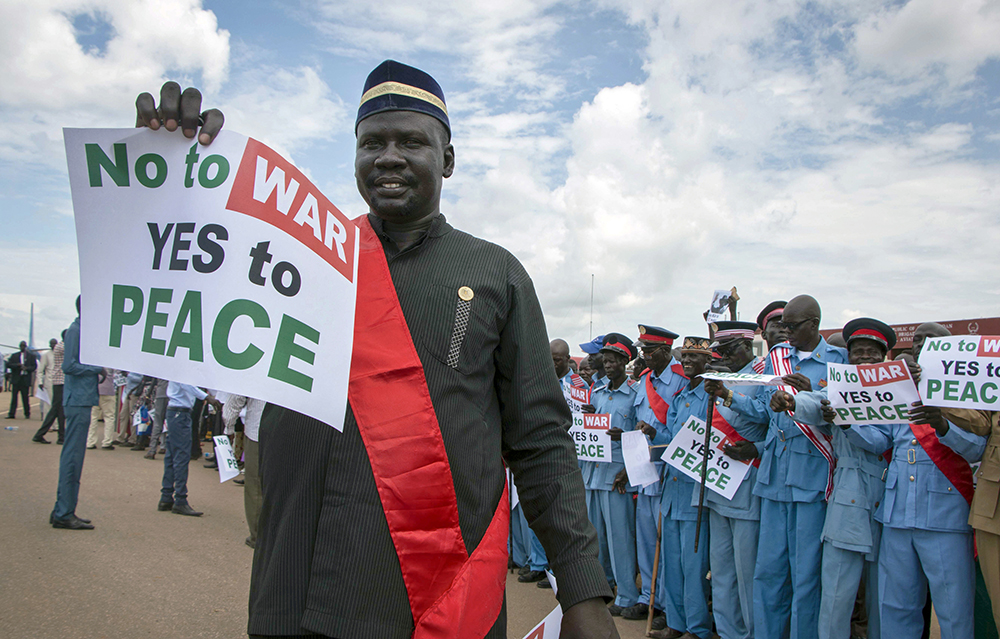
South Sudanese President Salva Kiir and rebel leader Riek Machar agreed to form a transitional government in the next 60 days, a big step in efforts to resolve a devastating six-month conflict in the world’s youngest nation, mediators said on Wednesday.

Government and rebel negotiators are slated to start talks on the formation of a transitional government of national unity on Thursday in the Ethiopian capital, Addis Ababa, according to a communiqué issued by the heads of state from East Africa’s regional trade bloc, the Intergovernmental Agency for Development, or IGAD.

The warring parties have 60 days to complete the talks and are also required to cease all military operations during the negotiations—or face punitive sanctions.

For the first time since the conflict erupted in December, IGAD leaders threatened late Tuesday night to impose sanctions on both parties.

The threat of sanctions, which diplomats said could include asset freezes and travel bans, came at an emergency summit in Addis Ababa and underscores the region’s growing frustration with South Sudan’s warring parties, which have violated previous cease-fire deals.

Although South Sudan’s political rivals have committed to the 60-day road map, those close to the conflict remain skeptical another promised cease-fire can hold.

“The leaders need to act swiftly on their promises by calling on their troops to lay down their arms immediately,” said Oxfam’s South Sudan country director, Cecilia Millan. “The people of this country have been forced to endure too much in the past six months.”

The conflict has also drawn in Uganda, and diplomats have singled out the presence of Ugandan troops as an impediment to peace.

Ugandan President Yoweri Museveni, who deployed troops to support a government offensive against rebel fighters shortly after the outbreak of the conflict, attended direct talks between the warring factions, the Ugandan presidency said.

James Gatdet Dak, a rebel spokesman, described Mr. Museveni’s participation as “a very good sign” for the peace process. It signals, he said, that interested parties “will now address the root causes of the crisis.”

But even as IGAD heads of state discussed the conflict, the United Nations mission in South Sudan said heavy gunfire and mortar shelling rocked Malakal, the capital of oil-producing Upper Nile state. The U.N. accused government officials of using a radio station in the oil hub of Bentiu to deliver threatening messages to civilians.

South Sudan’s military said it was investigating the allegations.

South Sudan’s oil regions have seen some of the heaviest combat since the conflict erupted and crude production has since dropped more than 30%, to 160,000 barrels a day, a severe blow to the country’s economy.

Messrs. Kiir and Machar agreed to form a transitional government in May, in a U.S. brokered deal, where they also signed a second cease-fire deal, after the previous one failed to hold. Sporadic fightinghas since continued, raising fears among aid officials that the ethnically charged conflict, in which more than 10,000 have been killed, could escalate into genocide.

Messrs. Kiir and Machar attended the IGAD summit and held face-to-face talks for the second time since the conflict erupted.

They agreed to recommit to the two previous cease-fire deals and allow unhindered humanitarian access to more than one million people who have been displaced.

In May, the U.S. Treasury Department ordered asset freezes and travel bans on Peter Gadet, a rebel commander loyal to Mr. Machar, and Gen. Marial Chanuong, head of Mr. Kiir’s presidential guards, for their role in the conflict.

The U.S. accuses Gen. Chanuong of ordering attacks against civilians in and around Juba shortly after the outbreak of the fighting. Mr. Gadet is accused of leading rebel forces during an assault on the oil hub of Bentiu in April that killed more than 200 civilians.

The Wall Street Journal
June 12, 2014
pg. A9

http://online.wsj.com/articles/south-sudan-peace-talks-reach-apparent-breakthrough-1402473616#

GROSS HUMAN RIGHTS ABUSES SEEN IN S. SUDAN: REPORT

Gross Human Rights Abuses


NAIROBI, Kenya — Horrific, ethnically motivated attacks of physical and sexual violence launched in South Sudan by warring parties constitute war crimes and crimes against humanity, Amnesty International said Thursday, while a new U.N. report said more than 300 people men from one ethnic group were slaughtered in one incident.

U.N. Secretary-General Ban Ki-moon said during a visit to South Sudan this week that the country has seen serious human rights violations. The U.N. report said that gross violations of human rights and international humanitarian law have been committed.

Much of the violence has been ethnic in nature and carried out by troops loyal to President Salva Kiir, an ethnic Dinka, and rebels loyal to former Vice President Riek Machar, an ethnic Nuer. The two men are scheduled to meet for face-to-face talks in Ethiopia on Friday. If the meeting happens, it would represent the biggest breakthrough since fighting broke out in December.

Thousands of people have been killed and 1.3 million have fled their homes. Ban had been pressing for a monthlong cease-fire beginning Wednesday so that residents could return home and plant crops, but South Sudan’s military spokesman, Col. Philip Aguer, said Thursday that he had no information on a cease-fire being ordered.

Aid groups fear that if residents don’t plant crops this month, the country could face mass hunger or famine.

The U.N. report documents the killings of “at least 300 Nuer men” in a neighborhood of the capital, Juba, the day after the violence broke out. The report said that bodies from many attacks were taken to unknown disposal sites.

Nuers across Juba were targeted by armed attackers wearing military and police uniforms, the U.N. report said.

The U.N. representative in South Sudan, Hilde F. Johnson, said accountability for the crimes is critical to ending the legacy of impunity in South Sudan and preventing similar atrocities in the future.

The Amnesty report documents the rapes of children and the shooting deaths of the elderly while lying in hospital beds. In one horrific act of violence, the report documents the rape of a 10-year-old girl by 10 men.

“Forces on both sides have shown total disregard for the most fundamental principles of international human rights and humanitarian law. Those up and down the chain of command on both sides of the conflict who are responsible for perpetrating, ordering or acquiescing to such grave abuses, some which constitute war crimes and crimes against humanity, must be held accountable,” said Michelle Kagari, Amnesty’s deputy director for Africa.

Associated Press reporters saw the aftermath of South Sudan’s violence in the contested city of Malakal in December and February in which dozens of houses were burned to the ground, patients were shot while lying in hospital beds, and corpses littered the streets.

The Amnesty report documents how the bodies of 18 women were found outside St. Andrew’s Catholic Cathedral in the town of Bor in January. Six of the women were members of the clergy, the report said. All were ethnic Dinka.

A woman told Amnesty that her 20-year-old son was taken from her home in Juba, tied up and shot. She said she then fled to a neighbor’s house where she and nine other women were gang raped by soldiers.

By Associated Press

Published: May 8, 2014

http://www.washingtonpost.com/world/africa/gross-human-rights-abuses-seen-in-s-sudan-report/2014/05/08/69efbe4a-d696-11e3-8f7d-7786660fff7c_story.html