
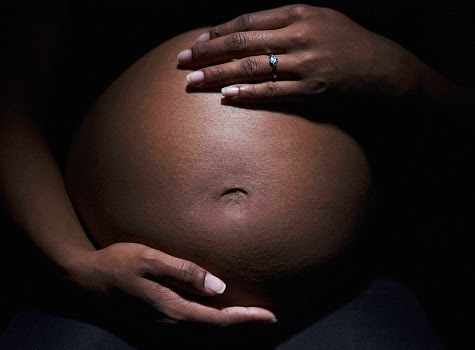
SUDAN – PREGNANT WOMAN SENTENCED TO DEATH AND 100 LASHES WHILE VIOLENCE CONTINUES IN DARFUR AND SOUTH KORDOFAN.

Pregnant Christian Woman Sentenced to Death in Sudan.


Meriam Yahia Ibrahim, a Christian woman from a Muslim background, was arrested on 17th February 2014 and charged on 4th March with adultery and apostasy. She is married to a Christian of South Sudanese origin. The couple have a young son (who is with Meriam in prison) and are expecting their second child later this month. The Government of Omar al Bshir (indicted by the International Criminal Court for Crimes against Humanity) does not recognise the couple’s marriage, hence the adultery charge.

Heavily pregnant and in a Sudanese prison – sentenced to 100 lashes and execution by hanging. Heavily pregnant and in a Sudanese prison – sentenced to 100 lashes and execution by hanging.

A further court hearing was held today (15th May). Meriam had been given three days to recant. However, at today’s hearing she calmly confirmed to the judge that she remains a Christian. The judge accordingly confirmed the sentence for apostasy of death by hanging. He also sentenced her to 100 lashes for adultery. The death sentence is to be imposed two years after she gives birth to their second child.

The lawyer acting for Meriam is preparing an appeal which must be submitted within 15 days. Meriam’s husband was not permitted to attend the court hearing today, and has been denied access to Meriam and their son in the prison.

Representations may be made to Sudan’s Misiter of Justice, Mohamed Bushara Dousa at moj@moj.gov.sd

The telephone number of the Sudan Embassy in London is 0207 839 8080
info@sudan-embassy.co.uk or tweet the UK embassy in Khartoum @SudanUnit
http://davidalton.net/2014/05/14/sudan-pregnant-woman-sentenced-to-death-and-100-lashes-while-violence-continue-in-darfur-and-south-kordofan/

Q&A: DOCTOR DESCRIBES HOW SUDANESE BOMBERS TERRORIZED HOSPITAL

“The loud screech of the jet was almost immediately followed by the loud boom of the explosion.”

Tom Catena, a Catholic missionary doctor from the United States, is the only trained surgeon in the rebel-held part of the Nuba Mountains of Sudan. At the Mother of Mercy Hospital in the village of Gidel, he and his staff treat bullet and shrapnel wounds, malaria, leprosy, thyroid disease, burns, and cancer. Catena has performed dozens of amputations, many of them on children.

For years, the hospital was spared the bombs and rockets of Sudanese government aircraft. Until now.

On May 1 and 2, Sukhoi and Antonov warplanes pounded the area directly around the hospital with 11 bombs and rockets. The explosions knocked doors off their hinges and damaged windows and screens in the hospital, Catena says, but didn’t kill anyone. Some civilians in nearby areas were wounded by shrapnel. Many sick patients ran home or hid in the surrounding hills.

The conflict in the Nuba Mountains tends to be overshadowed by the civil war in South Sudanand the atrocities in Darfur. The Nuba rebels of the Sudan People’s Liberation Movement-North are fighting for greater autonomy from the government in Khartoum. The area they rule has no electricity grid, no running water, and very few latrines. Roads are rutted dirt tracks that become largely impassable in the rainy season, which is about to begin.

Mother of Mercy Hospital runs on solar power, and gets food and medical supplies by road from an airstrip in South Sudan. In recent weeks, government forces have launched a fresh offensive. Many tens of thousands of civilians have been displaced.

National Geographic spoke by Internet phone with Catena about the bombing at the hospital and the precarious situation in the Nuba Mountains.

Where were you when the first bomb hit on May 1?

I was on the female ward doing rounds. The loud screech of the jet was almost immediately followed by the loud boom of the explosion. So we all got down on the ground. We didn’t have time to get outside. The building shook, and all the dust and debris fell from the walls and the ceiling. We originally thought the bomb fell right outside in the courtyard. That’s how close it sounded.

Where did it hit?

It hit on the hill behind TB Village [where tuberculosis patients are treated], just outside the hospital compound.

So I ran up there, and then we heard the jet coming back. At the time, staff were digging a pit latrine in TB Village, so we jumped in the pit, maybe three meters deep. And we waited. I saw the jet go overhead and got a clear picture of its underside, so I’m sure it was a Sukhoi 24.

The second bomb dropped, and I was still down in the hole when they dropped a third bomb just by the fence near the staff residences. It hit in the road just next to the fence. So it blew the fence to pieces and destroyed a bunch of trees, damaged part of the guesthouse. The roof of my room and the guest rooms was kind of warped, the doors were blown in, the windows were blown open. The place where we eat, the wooden doors were knocked clean off their hinges.

Then the plane came back and made a very low pass. I was back inside the hospital by then. It made a very low pass and dropped two bombs just beyond us. The noise was deafening. I didn’t see the bombs drop, but somebody said they were rockets, not bombs.

There were reports that a drone had come before the attacks.

That was the previous Saturday [April 26] and the previous Monday [April 28]. We were having a meeting, and we heard this thing overhead that sounded like a lawnmower. It was like a model airplane, but a bit bigger than that, kind of buzzing around.

So they were doing reconnaissance around the hospital.

Yes.

Then when the attacks occurred, it was a Sukhoi 24 that came the first day and an Antonov that came the next day?

Yes. You can hear the Antonov [which has a particular sound]. Some people panicked and ran around outside. But most people did pretty well and got into foxholes. Six bombs were dropped then, all on the periphery of the hospital. You could hear the change in pitch as the bombs fell through the air, and the explosions after.

How many patients did you have before bombings?

We were pretty full, probably 300.

How many in the children’s ward?
Maybe 50.

How did the patients respond to the bombings?

The children’s ward, the female ward, and maternity all emptied out. They took off. A lot of them went home. Some went to a small mountain. A few came back Thursday night, and after the bombing on Friday, more people took off. There were maybe 15 or 20 patients who went up to the hills. We went up there Saturday just to check it out and see what was happening. People were just there hiding out. During the course of this past week, quite a few stayed up there. They’d come down to get their medicine, and then go back up the mountain. They were going back and forth.

Were there any military targets in the vicinity of the hospital?

No, there was nothing.

Did you get any warning?

No. It was really quite a shock. The jet by itself is quite a shock when you hear it.

Have you been getting more war casualties recently?

Not huge numbers. We get four or five at a time. There’s been quite a bit of fighting north of here. The Sudanese army has retaken some towns. The people there are all living in caves because the Sudanese army is shelling their villages.

I gather this is a last offensive before the rainy season starts, and that they are attacking on several fronts.

The main points have been north and northeast of here.

What about the dirt road to South Sudan?

That’s still open.

Have you been able to get food and supplies?

It’s coming in a trickle, because there have been so many problems. Our truck turned over several months ago. It got destroyed. We’re still trying to get more things in.

How is the war in South Sudan affecting you?

If that fighting hadn’t happened, we’d be fully set by now with all of our supplies and food and everything. Everything could have come by road. But we haven’t been able to transport anything by road through South Sudan since the fighting started there. That’s been a huge blow.

Are you taking extra precautions now, thinking the bombers may come again?

We deepened the foxhole in our little compound, and we dug a few more foxholes. The main thing is that now, anytime you hear a plane, everybody takes off and runs for foxholes and jumps in.

They’re getting close enough where you can say they are targeting the hospital. They could have easily killed any number of patients. They were close enough. But I don’t think they want negative publicity. They are trying to play this double game: They are trying to terrorize people, but at the same time they want to get off the state-sponsored terrorism list and want to open up relations with the West because their economy is so terrible.

How are the hospital staff?

They are pretty shaken up. A lot of staff didn’t come to work for several days. Yesterday, a jet came and we heard it, and it bombed an hour or so north of here by road. The bombing sound was muffled. And some staff left then and haven’t come back. They’re traumatized by the whole deal. They’re still in that mode where any slight sound, people jump. You’re doing rounds and a vehicle starts, and people run to the hall saying, “What do we do?” There’s an increased startle response.

Things are starting to get back to normal now, but it’s been a very interesting week, to say the least.

By Jeffrey Bartholet
National Geographic
Published May 12, 2014

http://news.nationalgeographic.com/news/2014/05/140512-sudan-nuba-war-bombing-civilians-hospital-doctor-catena/

GIDEL HOSPITAL BOMBED BY GOVERNMENT OF NORTH SUDAN

Sudan Bombs Only Hospital in Nuba Mountains

WATCH: Exclusive Video Report

On May 1 the Sudan government sent a Sukhoi 24 fighter jet to bomb the Mother of Mercy Hospital in the Nuba Mountains. The attack was followed by another bombing on May 2. A surveillance
drone was seen just two days before, circling the area. The government has been bombing civilian and military targets since the war started three years ago but this is the first time the hospital has been directly targeted.
The hospital provides vital care to 150,000 patients annually in a region where humanitarian relief continues to be banned by the government.

“They want us to go away. They want to destroy any sort of infrastructure that’s here. They know the hospital’s important to people. They want to demoralize everybody.”
-Dr. Tom Catena, Medical Director of Mother of Mercy Hospital

The incident comes at a time when President Al Bashir is launching a massive offensive against SRF rebels in South Kordofan. After weeks of shelling they captured Abri, an important rebel garrison town north of Kauda. Fighting in the area continues.

Read Our Update. 

Over the last several months, the government of Sudan has mobilized the Janjaweed that fought in Darfur as a paramilitary group called the Rapid Support Force. After an unsuccessful offensive in South Kordofan earlier in the year, they were sent to Darfur to conduct a violent, punitive campaign there. We’ve just received reports that they are now returning to the region as part of the SAF offensive.

Read Their Story.

192 N. 10th St.
Carbondale, CO 81623