My Recent Trip to South Sudan – Part 1

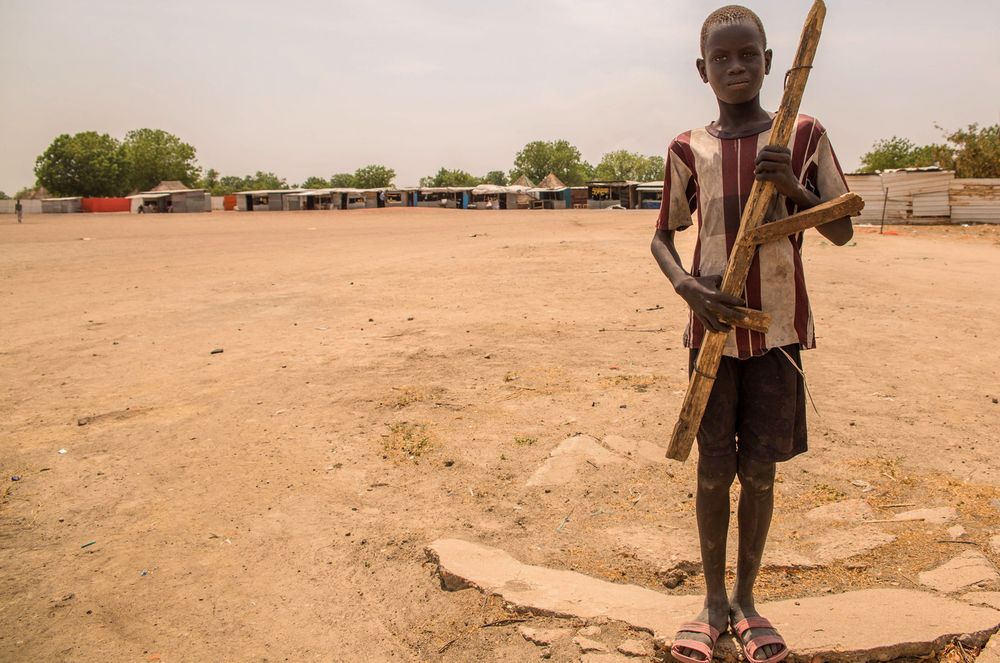
Each time I visit the Uganda refugee camps, I am always struck by the extraordinary resilience of South Sudanese families as they find new beginnings in this neighboring country.

The last five years have not been easy for South Sudan. Violence from a bloody civil war continues to spread, creating one of the world’s worst humanitarian disasters. Tens of thousands of people have been killed, 2 million have been displaced in South Sudan, and another 2 million have crossed the border seeking refuge.

Although South Sudan is still in the grip of a catastrophic crisis, I can tell you, change is happening and people are getting stronger.

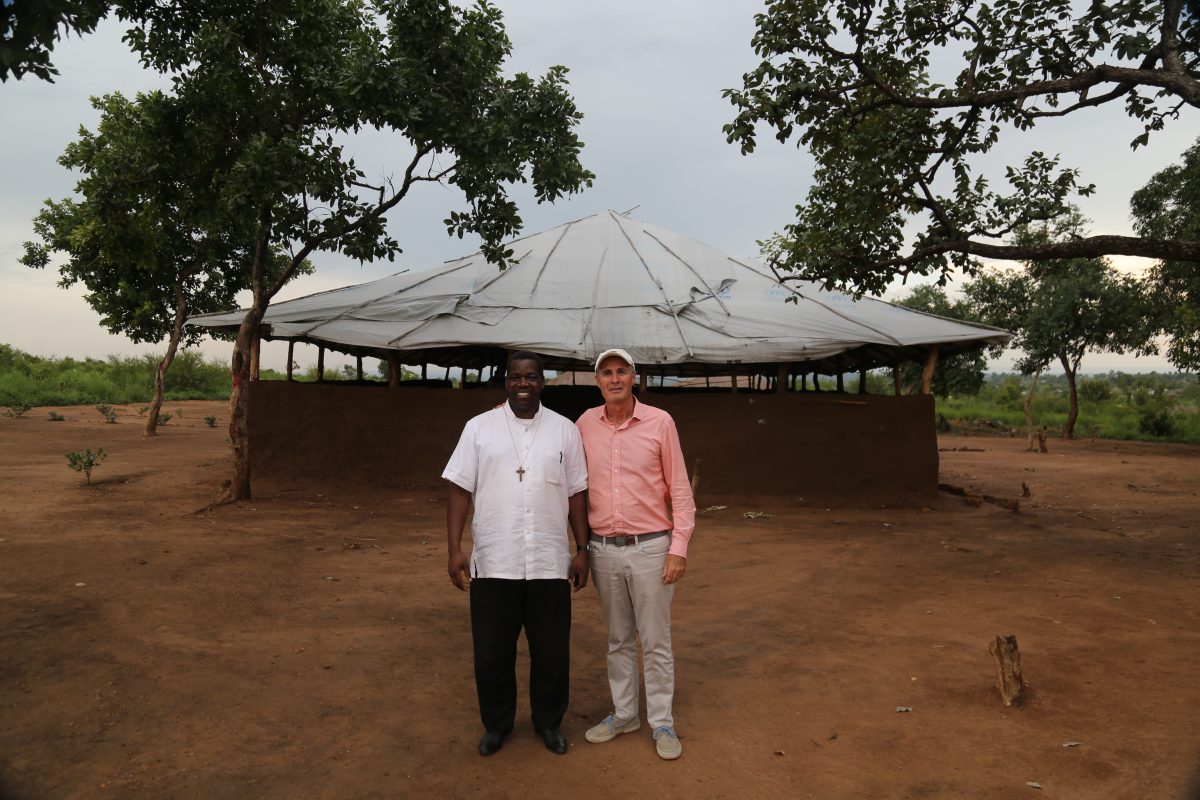
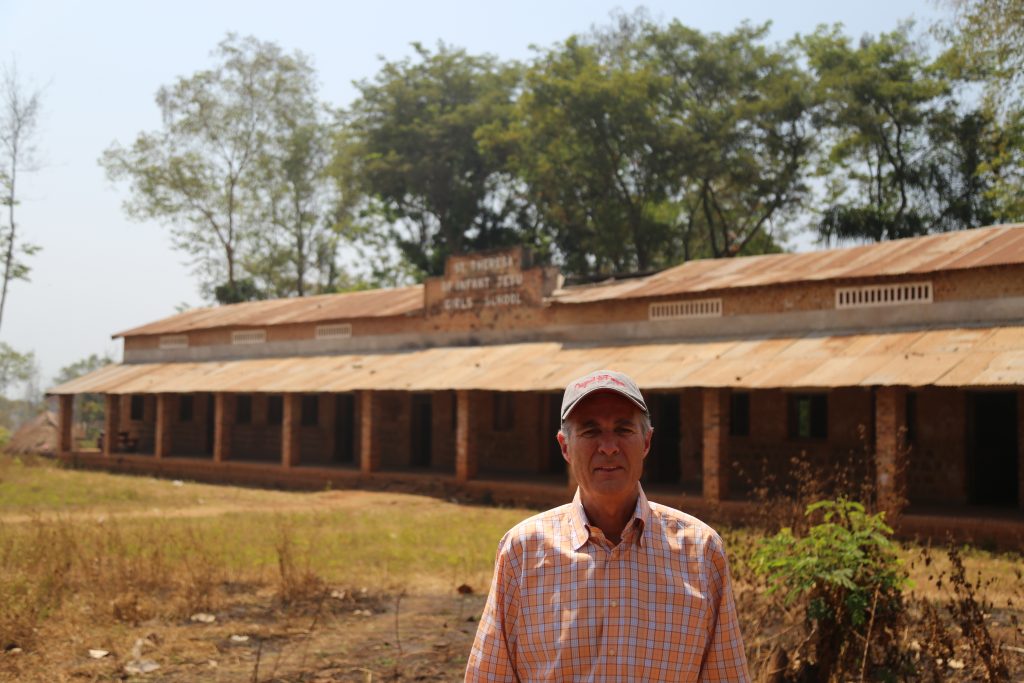
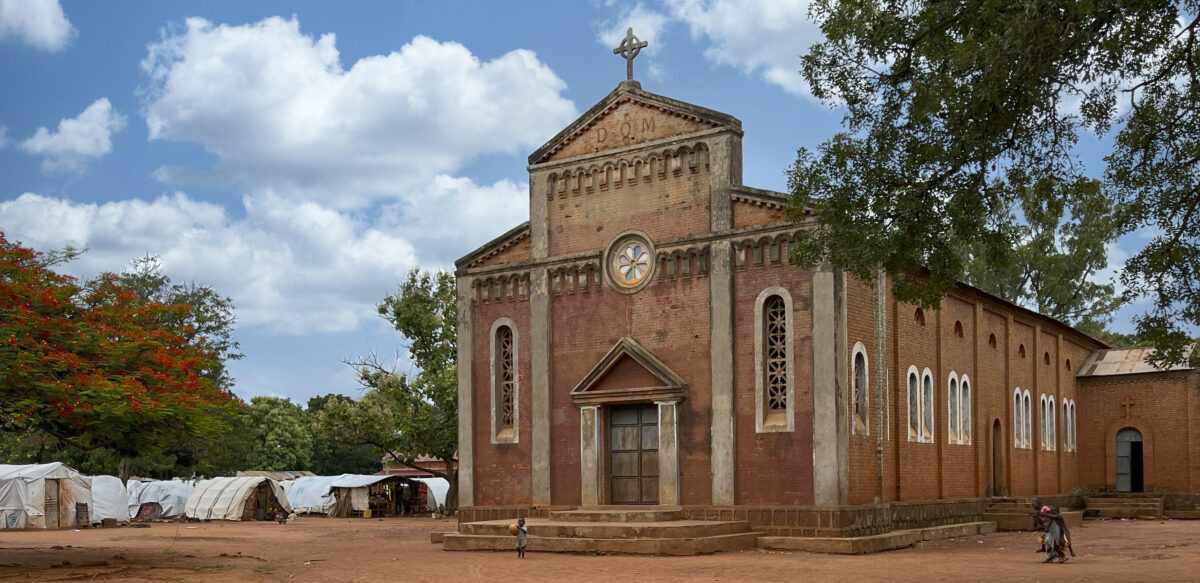
David Dettoni, the Sudan Relief Fund Director of Operations, and I began our 10 day visit in Koboko, a small town outside the largest refugee camp in northern Uganda—Bidi Bidi. We met with several bishops of the Sudan Catholic Bishops’ Conference, including the President of the conference and one of our key partners, Bishop Eduardo Hiiboro Kussala. We were joined by Fr. George Hume of Tombura-Yambio, who is currently based in Kampala, Uganda working with Sudan refugees. Fr. Hume explained the increasingly difficult conditions among the 275,000 people who now call Bidi Bidi home– making it the world’s largest refugee camp. Unfortunately, funding hasn’t been entering at the pace at which refugees are arriving, and the settlement is struggling to host the influx of new refugees. Food, water, medicine, shelter and other basic needs are very scare and difficult to come by.

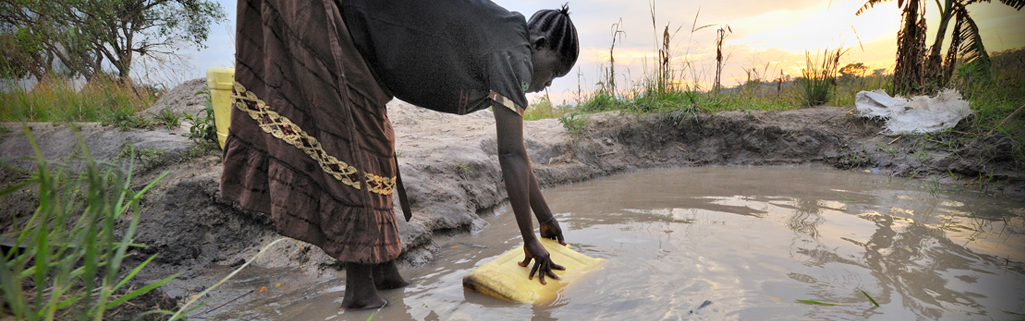
We stopped by Samaritan’s Purse offices outside of Bidi Bidi and met with the Deputy Country Director, Ryan Lane. Our team has been working closely with the nonprofit organization to assist in their water and sanitation projects within the camp. Together, we visited a bore well in Zone 1 of Bidi Bidi that was funded by our organization. Given the severity of the humanitarian crisis, so many families seeking refugee walk for days before arriving here starving, thirsty, sick, and in desperate need of assistance. And the young are being impacted the most. There are so many weak children who die from dehydration or water-borne illnesses because they have no choice but to drink from filthy, bacteria-ridden mud holes and rivers.

With the refugee situation worsening, we knew the importance of providing clean, safe drinking water to these suffering people in Bidi Bidi—something most of us take for granted here in the United States. Our team has committed to help provide more sustainable water sources inside the camp, which has been a huge undertaking.  However, the good news is that with the help of our generous donors, the Sudan Relief Fund was able to partner with Samaritan’s Purse and provide $100,000 towards their water, sanitation, and hygiene (WASH) program in the community. Because of you, we were able to meet immediate lifesaving needs inside the camp by contributing to the drilling of boreholes, building of latrines, and training on sanitation and hygiene.
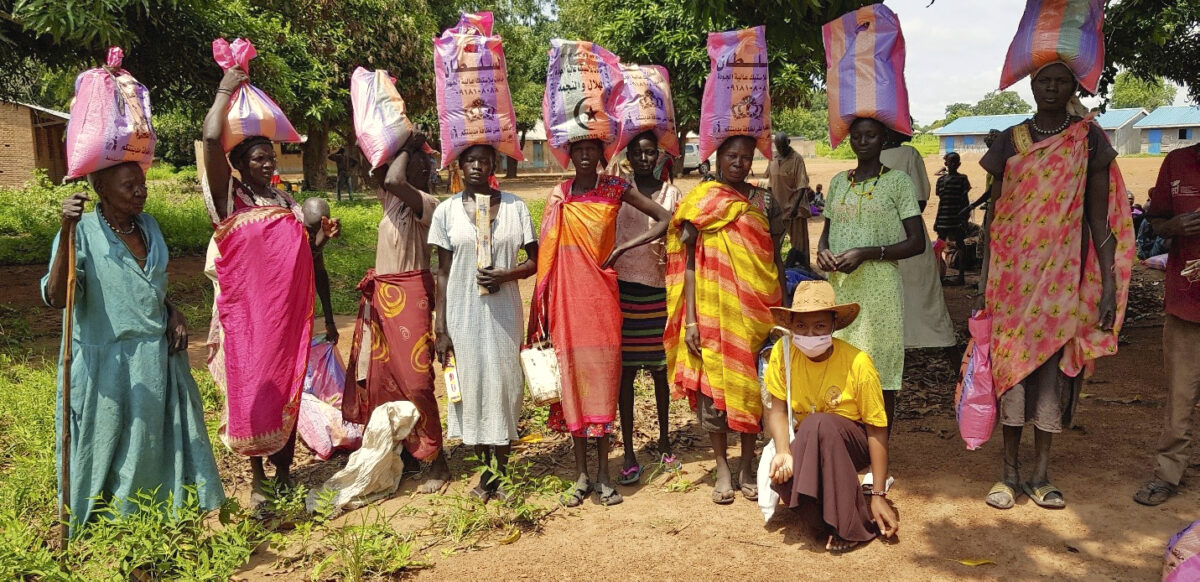
Refugees often travel for hours or days before reaching water that is often contaminated. But now, thousands of families have access to safe, flowing water whenever they need it.

These efforts have given so much hope in a desperate situation—thanks to your kind gifts.

Neil A. Corkery
President, Sudan Relief Fund 

Born Too Soon in a Country at War. Their Only Hope? This Clinic

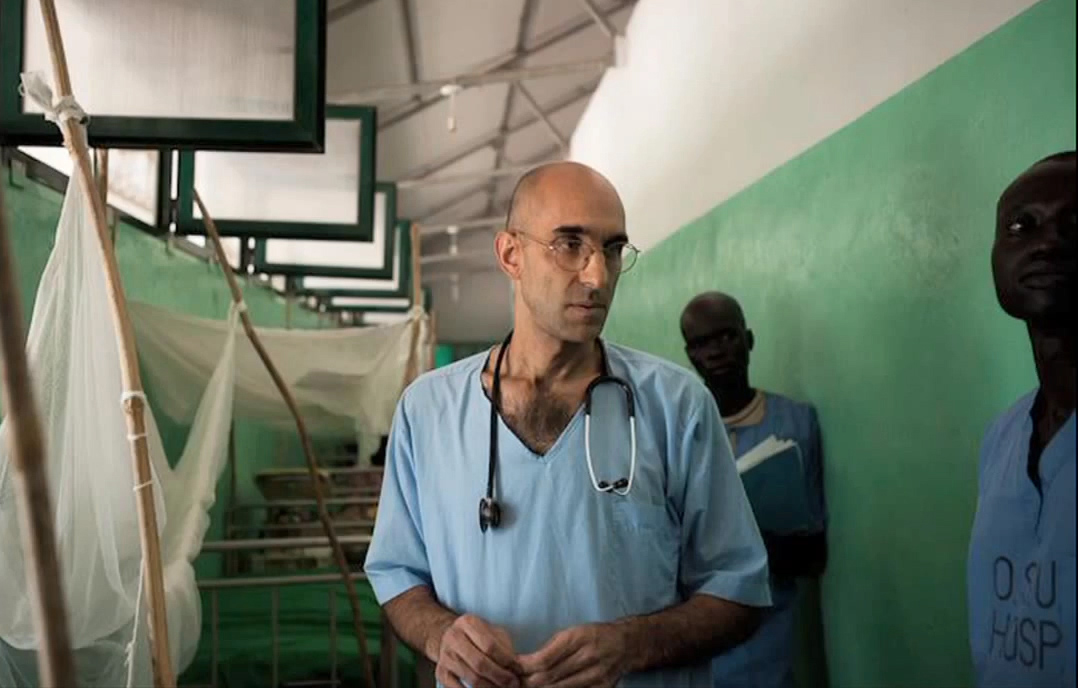
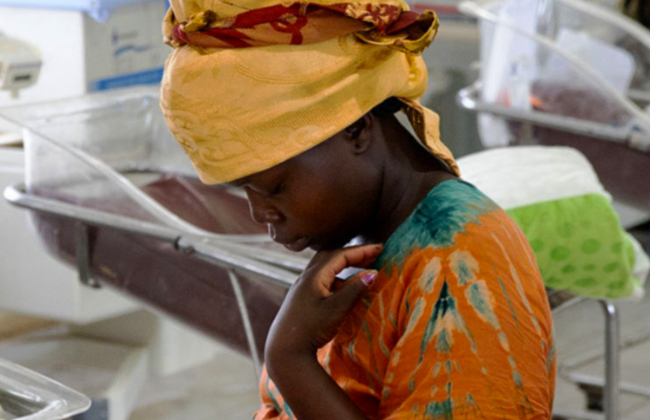
Inside the Juba Teaching Hospital’s neonatal clinic, 1 in 10 babies brought to this clinic will die, most from treatable conditions. But mothers have nowhere else to go; it is the only public neonatal clinic in South Sudan.

The world’s youngest nation is one of the toughest places in the world for newborns with health problems to survive. A brutal civil war has drained the economy, and as hospitals closed, doctors were forced to flee.

“Our mothers here, they come for help,” said Rose Tongan, a pediatrician. “And you pity them. You can’t do anything.”

The clinic has no formula for premature babies, no lab for blood tests, and no facility for x-rays. There are no beds for breast-feeding mothers so they must sleep outside, where they are at risk of infection and vulnerable to assault.

“I feel like: What can I do?” said Dr. Tongan.

Read the rest here.

Sudan Relief Fund on Voice of America 9-18-18

In an interview with VOA’s South Sudan in Focus, Neil Corkery, President of The Sudan Relief Fund, discusses why South Sudanese refugees will not leave the camps and return to their homeland, regardless of the latest signing of the peace deal agreement by South Sudan’s warring parties. Plus, Neil explains what needs to happen for long-term stability in the country and why he remains hopeful.

Listen to the full interview here:

YouTube Video

In South Sudan, some children work in mines to survive

Stained with mud, the 8-year-old traces her fingers over the infected wound on her elbow. “It’s hard work digging and the shovel is heavy. I just want to be in school,” Losika Losepio said.

Standing in a gold mine outside the South Sudan town of Kapoeta, the girl says she digs pits and sifts through soil daily so that her family can sell gold to buy food. Sometimes she works so late that she sleeps in the mines overnight, she said.

Mineral-rich yet exceptionally poor, Kapoeta state has been plagued by severe hunger during the conflict. Losepio’s father can’t afford to educate all nine of his kids so he sends four to school and keeps the others back to work in the mines. The youngest is 5 years old.

South Sudan’s five-year civil war has devastated the economy, fueling child labor in some of the country’s most impoverished regions.

More than 600 children, mostly between 8 and 12, are estimated to be working in a range of industries in Kapoeta including mining, retail and hospitality, according to the government, which has called the situation “urgent” and compounded by general ignorance and neglect in the community.

Read the rest here.

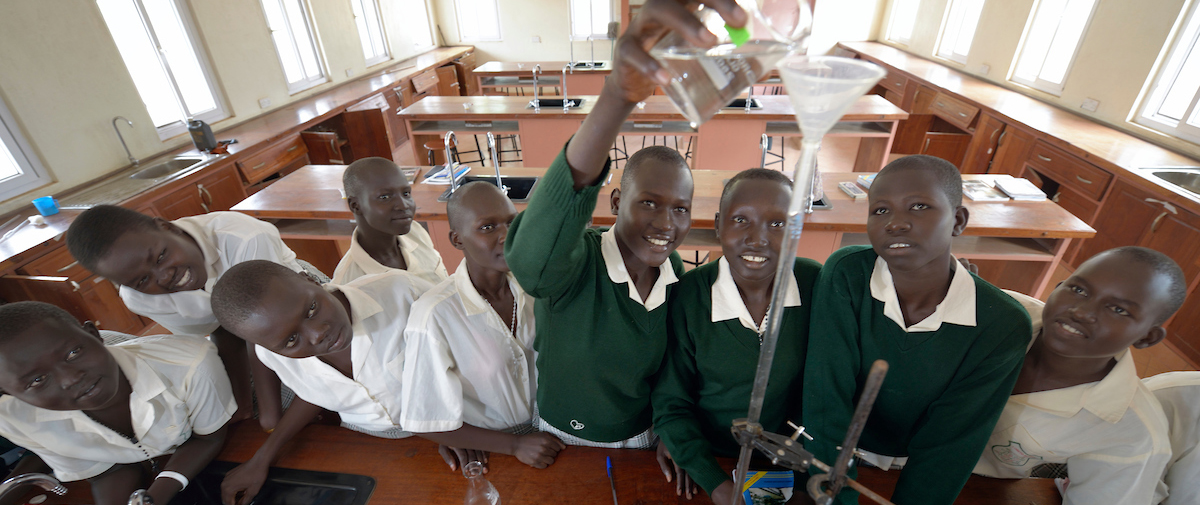
In times of conflict and crisis, education is critical. The Sudan Relief Fund is committed to getting children out of the workforce and into the classrooms. We ask that you please donate to our life changing education programs and give these traumatized children an opportunity to receive the necessary tools and skills that will help them flourish and return to normal lives.


In Uganda’s Refugee Camps, South Sudanese Children Seek the Families They’ve Lost

On a pale dirt road in the Palorinya refugee camp in northern Uganda, Raida Ijo clung to her 16-year-old son, Charles Abu. They sobbed quietly into each other’s shoulder. They had been separated for 19 months, since the day that fighting broke out between rebels and government troops in their village in South Sudan.

Charles was halfway through a math class in their village, Andasire, in South Sudan’s Central Equatoria state, when the shooting started. He ran for the bush, and after a sleepless night in hiding, set off for the Ugandan border with his younger brother, Seme, 14.

Their mother, Mrs. Ijo, feeling unwell, had checked herself into a hospital that morning. The boys knew that to try to find her would be too dangerous.

The two brothers are among 17,600 minors who have crossed the border into Uganda without their parents since the outbreak of South Sudan’s civil war in 2013, according to the United Nations refugee agency. Over the last year, the pace of the conflict and the flow of refugees have slowed, but aid workers say it will take years to reunite splintered families.

“When it’s already tough just to survive, and you don’t even know if your loved ones are alive, that adds a lot to the burden,” said Joane Holliger, a delegate of the International Committee of the Red Cross to a program in Uganda, Restoring Family Links. “There are a lot of protection concerns for unaccompanied children — child labor, teenage pregnancy, prostitution, child-headed families — so the quicker we can trace their parents, the better.”

Over the last two years, 433 unaccompanied minors have been reunited with their parents in Uganda. Worldwide, the International Committee of the Red Cross has opened 99,342 cases as it tries to reunite families.

 Read the rest here.


South Sudan Peace Deal Can Work – if Leaders Can Cooperate

South Sudanese leaders have once again agreed to end the country’s five-year civil war and work towards peace.

The deal, signed by President Salva Kiir and rebel leader Riek Macahr, agreed to end hostilities and to work together in a transitional government scheduled to last for three years. As part of the deal, Machar will return as vice president.

The document signed by the leaders says the president will collaborate, but will have duties and powers in accordance with a 2015 peace deal. The agreement allows the president to consult with people like Machar, but final decisions rest with Kiir.

Read the rest here.

SRF Delivers Lifesaving Ultrasound Machine

Thanks to the prayerful support of our donors, we are pleased to announce that the cost of an ultrasound machine has been covered for Dr. Zacharia at El Gigaiba Hospital.

During a recent trip to the Nuba Mountains, David Dettoni, Operations Director of the SRF, alongside Dr. PJ, U.S. missionary and SRF partner, presented Dr. Zacharia with the lifesaving medical equipment.

“I want to thank the SRF for the continuous support to the Nuba people, especially for me here at the El Gigaiba Hospital,” says Dr. Zacharia. “We have saved a lot of lives through your support and donations.”

Similar to an x-ray machine, ultrasound imaging is used to see inside the patient’s body and will allow Dr. Zacharia to better diagnose medical conditions affecting the organs, vessels, and soft tissues without needing to make an incision and before risky surgery. The ultrasound machine will directly benefit critically ill patients who would not normally have access to high-tech medical care. El Gigaiba Hospital is located in a very remote area and medical supplies are extremely limited. Dr. Zacharia often has to diagnose and treat patients with little to no equipment.

“It is very important for us, especially under intensive care and surgeries, to have a good diagnostic tool,” says Dr. Zacharia.

The ultrasound machine will immediately help Dr. Zacharia and his staff to greatly improve the quality of healthcare offered at the hospital, which will directly impact countless lives.

And it couldn’t have happened without your generosity.

Thank you for helping to sustain our life-changing initiatives in the Nuba Mountains. To keep our efforts going, we ask that you please send a donation today.

Without you, our work would not be possible.

Thank you and God bless you for your caring heart.

Sincerely,

Neil A. Corkery
President

Ashley Judd brings spirit of #MeToo to South Sudan

In her first visit to civil war-town South Sudan, actress Ashley Judd had a message for survivors of sexual assault in a country where rape is a widespread weapon.

“I see you, I love you and I’m here for you,” she said in an interview.

Judd was among the first to come forward last year with allegations of sexual harassment against a Hollywood mogul. Eight months since speaking out she has become a prominent face of the #MeToo movement, helping women around the world combat sexual abuse and hold their perpetrators to account.

The #MeToo movement has gained global momentum, however, many women in conflict-affected countries like South Sudan still suffer in silence.

Sixty-five percent of females in South Sudan experience physical or sexual abuse in their lifetime, with violence against women twice the global average, according to a study released last year by the International Rescue Committee and the Global Women’s Institute.

Judd told the head of the U.N. mission to South Sudan that the “impunity of men abusing women and girls must end, whether that be among citizens within South Sudan, within the U.N. system or back home in the USA.”

Read the rest here.

How You've Helped

Pope Francis Center

Read More

St. Theresa Hospital Nzara

Read More

Agok Leper Colony

Read More

Mother of Mercy Hospital

Read More