Want Pope Francis to visit South Sudan? Work for peace, bishops say

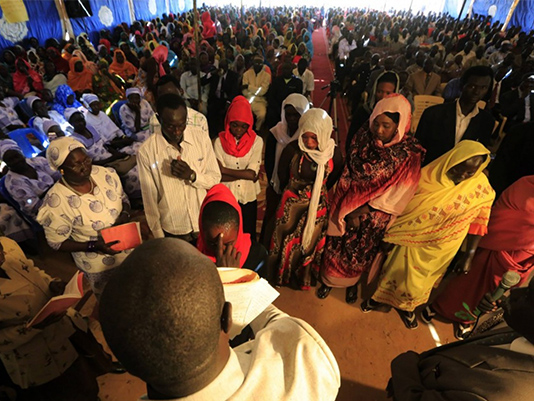
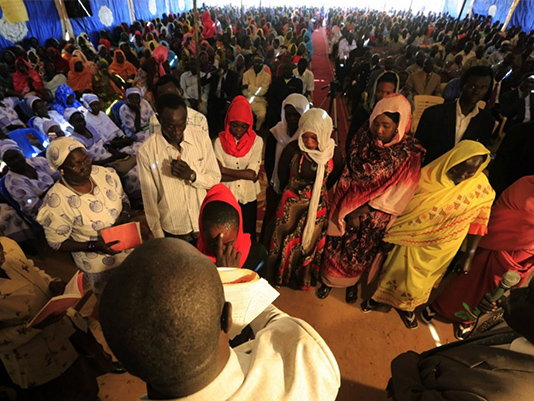
The news that Pope Francis will not be able to visit South Sudan this year prompted the nation’s bishops to voice reassurances that a future visit is possible, and ask for a renewed commitment to peace.

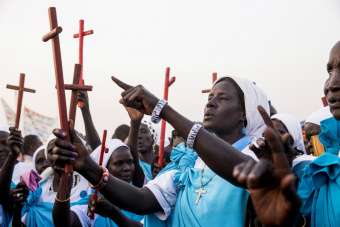
Eduardo Hiiboro Kussala, Bishop of the Catholic Diocese of Tombura-Yambio and President of the Sudan Catholic Bishops’ Conference, is calling on people in the country to work for peace. He suggested armed conflict in the nation, including lack of security, were obstacles to a papal visit.

“Pope Francis is very particularly (concerned) about the welfare of the suffering people in the world, and so is he for South Sudan,” said Bishop Kussala. “Pope Francis continues to remind us of the costs of war, particularly on the powerless and defenseless, and urge us toward the imperative of peace.”

The bishops said a visit from Pope Francis could have “uplifted the faith” of Christians and other believers and raise expectations of peace. His presence would also console the grieving and heal the broken-hearted. The bishops also noted his decision not to visit in 2017 should be received “in respect and prayer.”

Read the rest here.

Catholic University Graduates Tasked to be Peace Makers

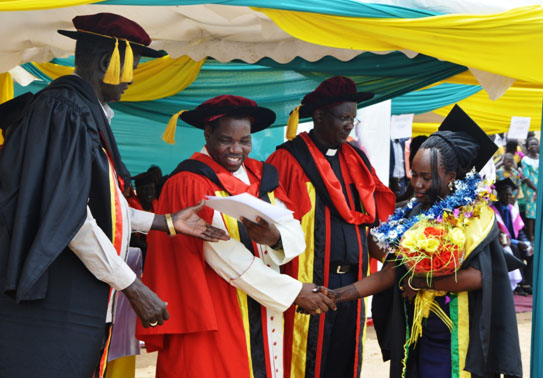
The Catholic University of South Sudan, funded by the South Sudan Relief Fund, held its 5th graduation ceremony at Nyakuron Cultural Centre. More than 250 students graduated from the faculties of Economics and Business Administration, Education and Agriculture.

The Chancellor of Catholic University, Bishop Edward Hiiboro, encouraged the cheerful graduates to bring peace, work together to stabilize South Sudan, and to give back to their country.

“As much as we are joyful about your success, we would like you to give back in good deeds,” says Bishop Hiiboro. “We would like you to pay back in helping South Sudan progress. We would like you to be people who will unite the country, and we would like you to be people to improve the economy of South Sudan. You will only do that as God fearing people.”

Father Mathew Pagen, the Vice Chancellor of the university, also urged the graduates to be peace makers and to have conviction, compassion, and commitment in whatever they do to succeed in life after university.

Catholic University of South Sudan is the only accredited university currently operating well enough in the country to be graduating students each year. Since opening in 2008 and despite the current ongoing civil war and violence, hundreds of students have attended this strong higher learning institution, which represents real hope for young people in the country.

http://www.gurtong.net/ECM/Editorial/tabid/124/ID/20432/Default.aspx

Dr. Tom Catena—2017 Aurora Prize Laureate

The Sudan Relief Fund would like to congratulate Dr. Tom Catena for winning the prestigious Aurora Prize for Awakening Humanity. Dr. Tom, a Catholic missionary from New York, is the only doctor permanently based in Sudan’s war-ravaged Nuba Mountains where humanitarian aid is heavily restricted. He was selected as the 2017 Aurora Prize Laureate from more than 550 nominations submitted from 66 countries. He won the humanitarian award for his tireless commitment and selfless efforts for serving more than 750,000 citizens amidst ongoing civil war. Dr. Tom is truly an inspiration to all. We are extremely proud and thankful for his extraordinary efforts as he continues to serve our brothers and sisters in Christ”

Read the rest here.

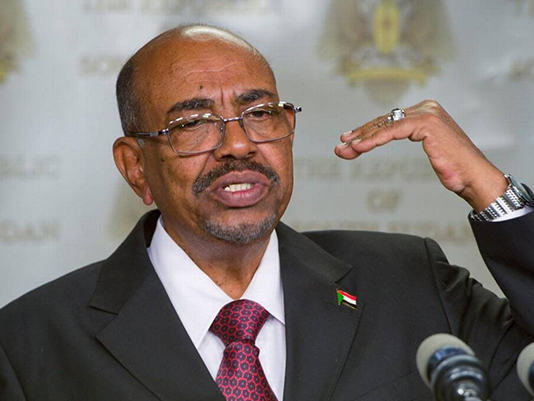
Melinda Henneberger: President Trump, don’t meet with Sudan’s Bashir

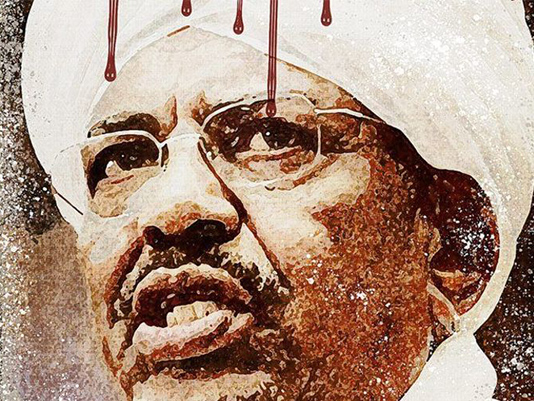
In Sudan’s remote Nuba Mountains, where Muslims and Christians live in peace with one another but can’t remember a time when they weren’t under attack from their own barrel-bombing, Osama-harboring Islamist government in Khartoum, Donald Trump’s election seemed like a rare reason to celebrate.

 Many in Nuba who’d been so optimistic that Trump would stand with them can’t be smiling now, though, at the news that our president may actually meet with Bashir on Saturday, at a summit convened by Saudi Arabia during Trump’s first foreign trip since taking office.

If Trump meets with him, even as part of a group, he’ll send the message that we are indifferent to human rights abuses and don’t care what Bashir does in Darfur or in the Nuba people’s gorgeous, but pockmarked, South Kordofan province.

National Security Adviser H.R. McMaster has said Trump is going to the summit of Muslim leaders to “deliver an inspiring, yet direct speech on the need to confront radical ideology.” Which is exactly the ideology to which Bashir has devoted his life.

President Trump, you should know that Bashir, too, uses chemical weapons, and he has put these brave, resilient people through suffering I so wish you could see for yourself. Please don’t further embolden the monster who makes them take cover in caves.

http://www.kansascity.com/opinion/opn-columns-blogs/melinda-henneberger/article151149612.html

Q & A with Sr. Yudith Pereira, bringing health care, education and peacebuilding to South Sudan

The Sudan Relief Fund would like to recognize and commend Sr. Yudith Pereira for her inspiring acts of kindness, impact, and commitment to alleviating the suffering country of South Sudan. Pereira is the Assistant Executive Director of Solidarity with South Sudan; She helps run the organization’s program that include projects in education, health, and pastoral institutions that empower South Sudanese people to build a just and peaceful society.

Sr. Pereira and I met last month in Rome and have worked together for several years due to the partnership we have developed with the organization. The Sudan Relief Fund is currently funding aid relief to a refugee camp in the town of Riimenze, in collaboration with Solidarity with South Sudan.

Most recently, Sr. Pereira spoke with Global Sisters Report about her daily work, the country’s needs and her spirituality in the face of suffering. To read her full interview and learn more about her exceptional efforts.

http://globalsistersreport.org/blog/q/ministry/q-sr-yudith-pereira-bringing-health-care-education-and-peacebuilding-south-sudan

Neil Corkery
President

Citizens in Yambio ride for peace and co-existence

In a recent open letter, the Catholic Bishop of Tombura Yambio Diocese, Barani Eduardo Hiiboro Kussala is reminding leaders that “achieving peace demands of all of us that we act with real respect for human life. It demands that those who still sponsor anger, hate, segregation and violence against on another end such meaningless projects or ideas.”

 In hopes of promoting peace and co-existence among the people, Bishop Kussala arranged a bicycle ride for the residents of Yambio, the capital of South Sudan’s newly created Gbudue state.

The ‘May they be one’ event was held at Gbudue stadium. Such bicycle riding activities are commonly organized in the region because it brings together different people, despite their positions and various ethnicity.

The governor of Gbudue state, Daniel Badagbu, expressed his gratitude towards the sports activities, saying they have the ability to boost working relations between citizens and transform societal cultures of war to cultures of peace and harmony.

Read more here.

South Sudanese troops accused of civilian ‘slaughter’

Testimonies from South Sudanese refugees are revealing glimpses of brutality as hundreds flee into Uganda for a second day following an attack by government forces on the border town of Pajak.

According to reports, at least 17 people were killed while approximately 3,000 new refugees crossed into Uganda this week. Some were shot as they tried to flee, two children were run down by a car, and others had their throats slit.

The government denies its Sudan People’s Liberation Army (SPLA) forces target civilians and said Monday’s attack was to flush out rebels.

The United Nations said in December it had evidence of ethnic cleansing by both government forces and rebels, with soldiers showing callous disregard for civilian life.

The Ugandan government and United Nations refugee agency (UNHCR) are scrambling to complete a half-built refugee settlement near Ngomoromo for the latest arrivals, who are currently living in the bush at the Ugandan border. Even when these refugees reach the relative safety of a settlement camp, many still face an agonizing wait for loved ones who went missing in the panic.

Read more here.

The Ugandans who let 272,000 South Sudanese refugees move in down the road

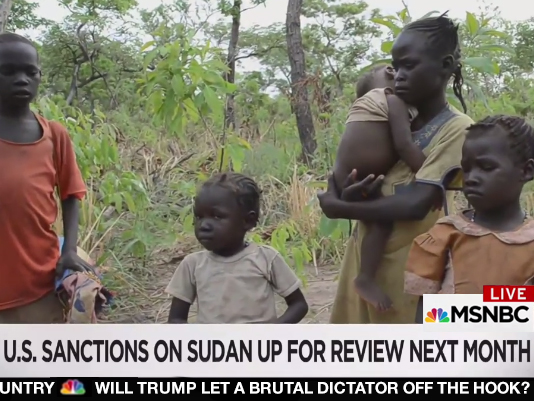
America, meet Uganda, where in this almost all-Muslim corner of the country the locals already have made room for 272,000 South Sudanese Christians fleeing famine and ethnic cleansing in a country on the brink of genocide—a situation that’s just part of what the United Nations is calling the greatest humanitarian crisis since 1945.

Of the 1.5 million South Sudanese on the run from tribal warfare that has now developed into mass rape, forced starvation and other unspeakable violence, almost 700,000 have streamed across that border since peace negotiations broke down last July.

“What the whole world should know is we’re not doing it because we must do it,’’ says Robert Baryamwesiga, of the Ugandan prime minister’s office, who is the commandant of Bidi Bidi Refugee Settlement camp. “We are doing this because we’re part of the international community, and we have this obligation to humanity.”

Ugandans insist they will keep making room, at the same time the United States is taking a “pause” on accepting any refugees. For now, the pause is a moot point since no one in the refugee settlements has been cleared for resettlement by the United Nations.

But in the long term as well as on the aid side, Baryamwesiga worries about whether the U.S. will do its share under President Donald Trump: “The U.S. has been our biggest partner with resettlement, but now we don’t know what the future will hold.”

http://www.kansascity.com/opinion/opn-columns-blogs/melinda-henneberger/article138504578.html

In Sudan, health care is a political act for hero doctors

It took Ahmed Zacharia, the only native-born doctor of the four who serve 1.5 million people in the Nuba Mountains, a full 11 years to complete his six years of medical study. Too little time in the library wasn’t the problem, but too much time in jail, where he was tortured for opposing the Islamist government.

He and his American colleague, Tom Catena, the only trained American surgeon in the Nuba Mountains, provide so much more than medical care in a place where women still often die during childbirth and children of dehydration from untreated diarrhea. Their decision to stay on and work in hospitals that have repeatedly been bombed by government forces inspires the kind of gratitude that you can really only call love.

But recently, both of their personal lives have taken turns that gave the Nuba people a reason to celebrate: Zacharia, who is 40, married not long ago, and in the ultimate expression of hope in an uncertain future, he and his wife are expecting their first child.

Catena is also a newlywed whose wife, Nasima Mohammed Bashir, is a Nuba born nurse. Dr. Tom is Nubian now!’’ a local friend says. Nasima’s own marriage, of course, is not at all typical: “I’m the first person to marry a white man,’’ she says, which people being people, “some criticize and some appreciate.”

In a world of shifting alliances, Zacharia loves that medicine is so morally unambiguous: “Even those injured on the front lines” while fighting against his people “come to us, and there are medical laws and you treat them; it’s straightforward.”

Catena says he is motivated by his Catholic faith and seems to have settled in the area. He says the only one way he’d leave this life is if things got so much better that his patients there didn’t need him anymore. That will not be happening any time soon.

http://www.kansascity.com/opinion/opn-columns-blogs/melinda-henneberger/article137317423.html

How You've Helped

Pope Francis Center

Read More

St. Theresa Hospital Nzara

Read More

Agok Leper Colony

Read More

Mother of Mercy Hospital

Read More