Shadia

Mother Saved From Near Fatal Tragedy

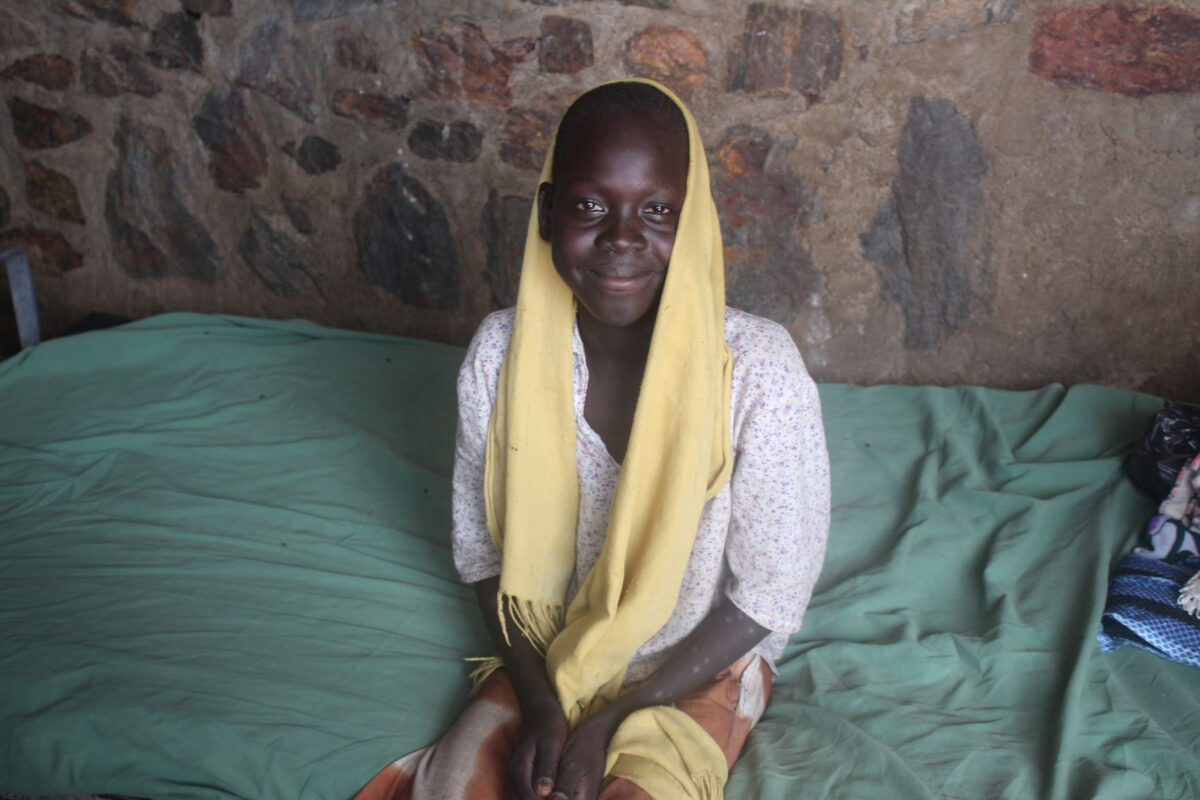
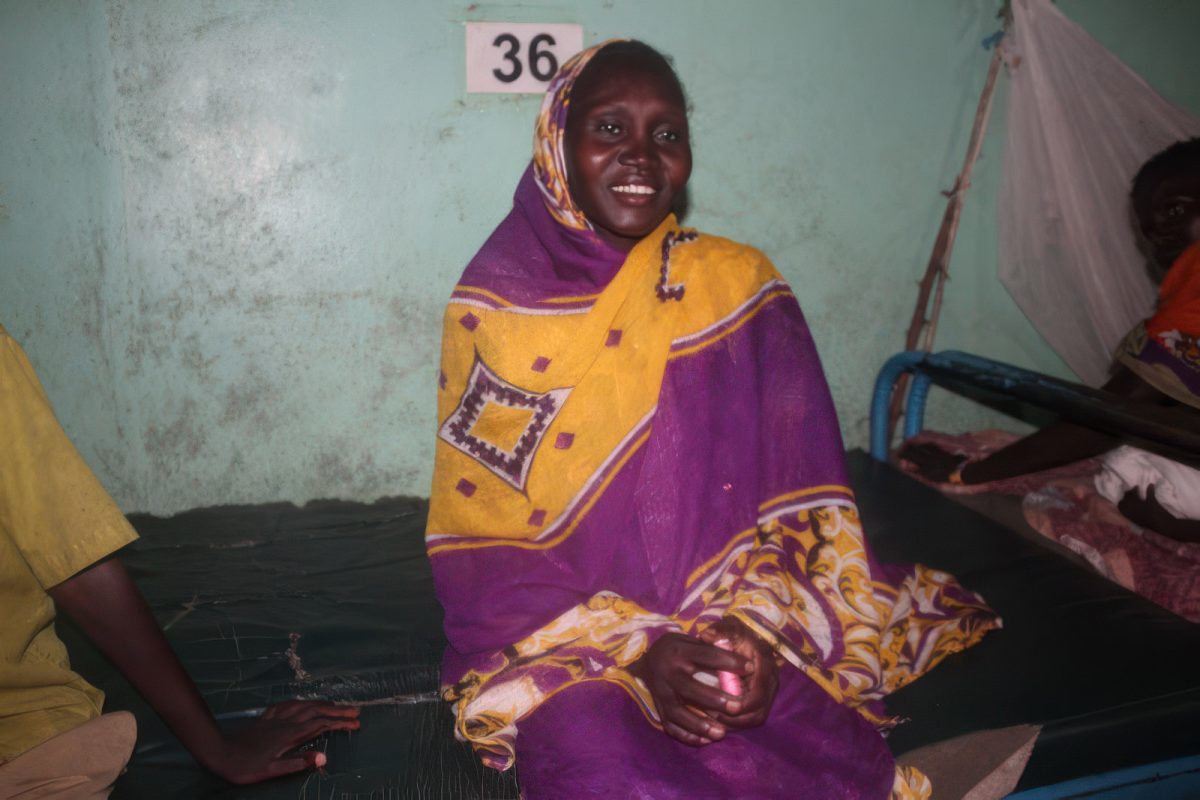
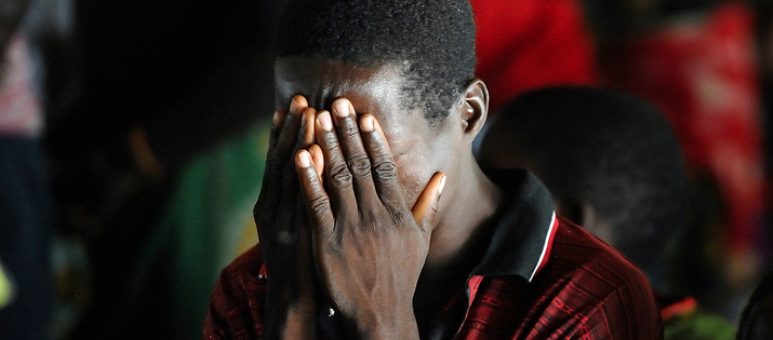
Shadia leads a busy life as a mother taking care of a large family. In June of 2022, she was 36 years old and looking forward to welcoming another child. As a veteran mom, Shadia knew the pains she began experiencing when only six months’ pregnant were not a good sign.

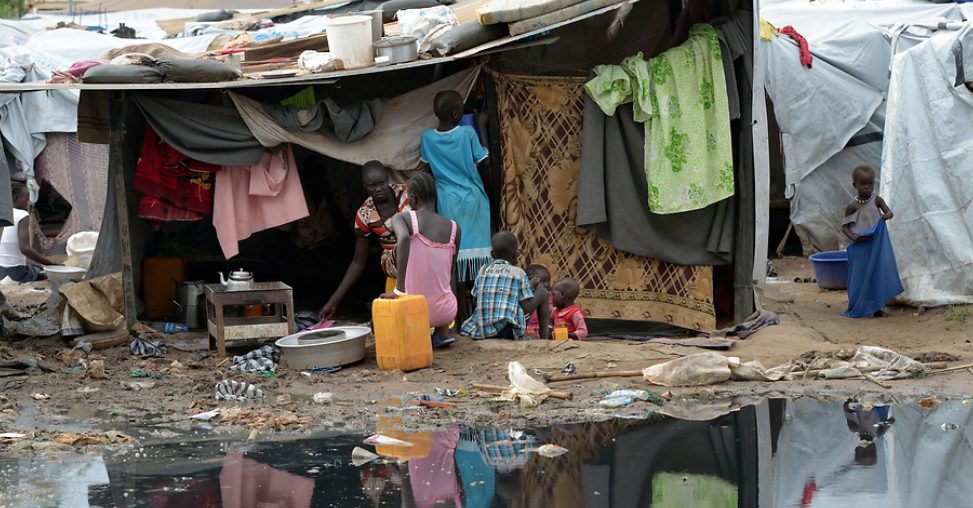
Pregnancy and childbirth is still very risky for women in South Sudan, and where Shadia resides in the town of Siref is no exception. Very few mothers have access to prenatal care here, and many women still give birth in villages with no medical presence available.

After returning from the farm one day, Shadia felt such sharp abdominal pains in her sides that she went immediately to the nearest dispensary. She was given some pills to take, but they didn’t help and the pains persisted.

Shadia went to a private clinic in Heiban seeking help, where she was also given some medications. She took them for a week, but the pains still didn’t stop. Instead they were growing increasingly worse and becoming debilitating.

“I thought I would die and not see my kids again. But being here now and healthy, I can only praise God.”

At last, Shadia was taken to Mother of Mercy Hospital – a medical facility in the remote Nuba Mountains supported by Sudan Relief Fund. The hospital is an outpost of hope serving thousands in the region in need of medical help.

Missionary doctor and Sudan Relief Fund partner, Dr. Tom Catena, directs the hospital and has served as its only onsite surgeon for many years, both in peace time and war time. He is known locally as a legend among the people for saving so many lives.

By the time Shadia made it to Mother of Mercy Hospital, she was in very poor condition. She was in tremendous pain and struggling to breathe. An ultrasound revealed the baby in her womb was no longer viable, and the infant’s death was causing Shadia life threatening complications.

But Shadia was fortunate to have access to critical medical intervention that saved her life. Today she is alive and well, feeling grateful to have been treated in time at Mother of Mercy Hospital. “I don’t even know what to say or where to start. Seeing myself walk again when I, and the entire family – even the whole of my village – thought I would not survive, is a miracle in itself,” she praised. “I personally thought I would die and not see my kids again. But being here now and healthy, I can only praise God.”

Shadia continued, “I am grateful to Dr. Tom and the nurses for their care, and the donors who are supporting us here in Nuba. I am so happy I am alive and healthy. I pray God may give you all long life!”


These stories are made possible by your support of Sudan Relief Fund. Thank you for partnering with us to save lives.

Would you like to pray for us? Sign up for our email prayer group to receive weekly emails sharing important needs to pray for. You’ll join a faith community around the globe praying to bring hope and help to suffering people in this forgotten part of the world. Click here to find out more.

Food Deliveries, More Orphans, and a New Home on the Horizon

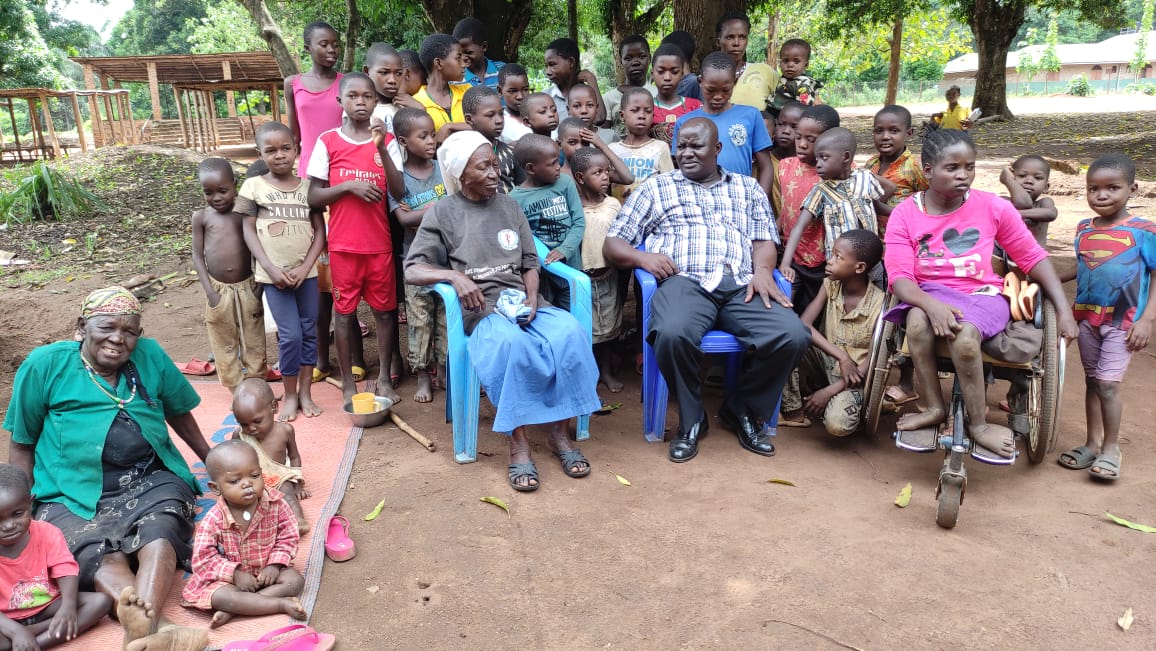
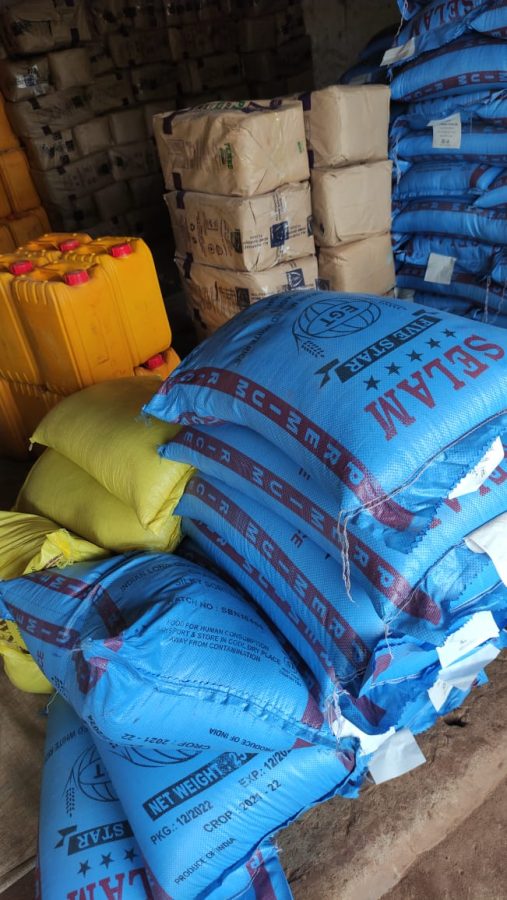
The children of Saint Bakhita Orphanage continue to be sustained by your compassionate support. Recently a generous food delivery was made to supply the needs of 70 children who depend on this care as their lifeline.

For those not familiar with Saint Bakhita, Sister Bianca Bii is the courageous matriarch of Saint Bakhita Orphanage, who steadfastly held the children together through a tumultuous year, supported by faithful sponsors and donors who stood with them throughout.

From fleeing violence near their orphanage, to surviving life in a refugee camp, and returning to their home only to have to flee once more, the unshakeable Sister now oversees the children’s care in their new, more stable location of Nzara.

Caring for More Orphans

Now even more children have come to Sister Bianca for help and care. She has raised generations of orphaned and abandoned children, and with your help, St. Bakhita Orphanage provides them with food, clothing, shelter, clean water, basic medicines, and the chance to go to school. Each one is loved and valued, and no one is turned away.

Imagine how comforting that sounds to a traumatized child who has just lost everything.

Recently, Sister Bianca took in 30 more orphans who came to her in Nzara. The group that now totals 100 children is temporarily living in tents – a necessary move when the orphans had to be relocated quickly to Nzara for their safety.

The tragedy of orphans in South Sudan is a crisis of epidemic proportion. War, internal violence, poverty, disease, famine – all these factors contribute to children suddenly facing life in a perilous world alone. The reality is, they can’t survive alone very long.

But Sudan Relief Fund is there to stand with Saint Bakhita Orphanage. Because of your support, we’ve been able to provide additional food at a critical time to meet the needs of more children.

A New Home on the Horizon

We’re also grateful to share that because of our steadfast supporters, a permanent housing solution for the children in Nzara is in the works! Our local partners identified a piece of land they believe will provide a successful location for the orphans’ future home, and plans for construction are underway.

On April 19, Sister Bianca joined Bishop Eduardo Kussala and others as a ceremonial groundbreaking event was held to bless the land and construction of the project. Sister Bianca expressed her joy at the groundbreaking of the plot, saying she is “grateful to the partners for the support of the construction, and that it will provide a safe and conducive environment to take care of the orphans.”

The building will contain two dormitories (one each for boys and girls), a kitchen, staff quarters, and a multi-purpose hall. Bishop Kussala praised that the new home for the orphans will “promote health, education, and children’s empowerment,” adding that helping an orphanage is like transforming the world.

That’s what our donors do – transform the world for children who have lost theirs. We’re immeasurably grateful to our donors who faithfully sponsor the orphanage with monthly support. And to everyone who has shared a compassionate gift for children who would be lost and alone without it.

Breaking News in Sudan

Many have followed the breaking news in the northern nation of Sudan. It’s feared the fighting in Khartoum could further disrupt food supply shipments and worsen the severe hunger crisis already facing South Sudan this year.

Another effect of the fighting is an influx of refugees from the north, heading or returning to South Sudan to escape the conflict. The struggling nation of South Sudan is reeling from deep humanitarian challenges of its own and scarcely equipped to accommodate mass numbers of refugees who are already arriving.

At present the volatile situation in Sudan has not affected the children of Saint Bakhita Orphanage, who remain in a safe location and are provided for at this time by the generosity of sponsors and donors.

We offer heartfelt gratitude once more for your critical role in sustaining the lives of so many orphaned children at Saint Bakhita. Your commitment allows the light of Saint Bakhita Orphanage to shine as a place of hope for heartbroken children who have nowhere left to go. If you would like to help Saint Bakhita’s orphans, please go here.

Sudan Update

Air strikes are battering the capital city of Khartoum, Sudan, breaking a three-day truce that was negotiated to allow civilians to flee the country after intense fighting.

The government says the strikes were a necessary move to counter actions of the rival military forces known as the Rapid Support Forces (RFS) in the city, where fighting began April 15.

Clashes erupted between forces behind rivaling generals, Abdel Fattah al-Burhan of the Sudanese government military, and Mohamed Hamdan Dagalo, known as Hemedti, over the future of RFS being incorporated into the national army. 

Foreign governments moved quickly to evacuate their diplomats last week when the conflict erupted, though civilians have been caught in the crossfire and millions remain stranded in Sudan. Thousands of others have made their way to evacuation routes by air, land, or sea.

The official death count is listed at 500, including 2 US nationals, but the actual number is believed to be far greater.

Many South Sudanese living in the southern region of Sudan – having previously migrated there to escape violence in their own country – are now returning to South Sudan, or crossing borders into Chad or Egypt where they can fly into Juba, South Sudan’s capital city. Humanitarian efforts are already underway in South Sudan to prepare for the anticipated influx of refugees.

Mo Ibrahim, a Sudanese businessman and philanthropist, said his country is now embroiled in a civil war – one which must be kept from expanding to neighboring borders to prevent a regional crisis. “We don’t want another Syria,” he said. The worst fighting is presently concentrated in the north of Khartoum, near the convergence of the Blue and White Niles.

Trapped civilians bunkering at home in Khartoum struggle to hold out, while venturing outside for supplies has become risky. One civilian reported not having had a single drop of water at his home since fighting began April 15. Neighbors with wells in their home have been sharing water, he said.

The World Food Program announced Monday it would resume relief operations in Sudan. The aid organization pulled out two weeks ago following three staff member casualties that happened in the initial fighting.

The first flight bringing major medical relief has landed in the country, as over 70 percent of healthcare facilities were forced to close in Khartoum. The International Committee of the Red Cross (ICRC) reports a plane landed at Port Sudan carrying eight tons of relief supplies and health kits for hospitals. The ICRC is now seeking guarantee of safe passage to deliver those supplies into areas with active fighting.

Foreign governments continue rescue operations to evacuate nationals still caught in the fray. The FCDO (Foreign Office) advised civilians wishing to leave to make their way to the evacuation point in Port Sudan.

An organized US convoy has arrived in Port Sudan to evacuate more US citizens by ship to Saudi Arabia. According to Reuters, the Navy ship USNS Brunswick has reached the port. It is believed this ship will be used to bring stranded US citizens aboard to assist in rescue efforts.

There are hundreds of US citizens thought to remain stranded, with other reports saying the number could be as much as 16,000. The Biden administration claims most civilians still on the ground are dual citizens who’ve lived in Sudan for years and may wish to remain.

The Biden administration also reported buses carrying several hundred Americans reached Port Sudan, guarded by drones in the air. A Pentagon representative said the Department of Defense “deployed US intelligence, surveillance, and reconnaissance assets to support air and land evacuation routes.” Deputy Pentagon Press Secretary Sabrina Singh said the US was “moving naval assets within the region to provide any necessary support along the coast.”

Missionary doctor Tom Catena directs the Mother of Mercy Hospital in Sudan. The hospital is a Sudan Relief Fund supported facility that provides the only critical-level medical care available in the remote Nuba Mountain region.

Dr. Tom reported the hospital has not yet received patients affected by the conflict in Khartoum, which is removed by a distance equivalent to traveling from New York City to Atlanta. However, he said the cost of food and fuel has already doubled, and supply lines may be affected if the fighting escalates. Dr. Tom issued a plea for continued support during this tenuous time so the hospital can continue its lifesaving work.

Read more of the breaking news in Sudan and South Sudan here and here.

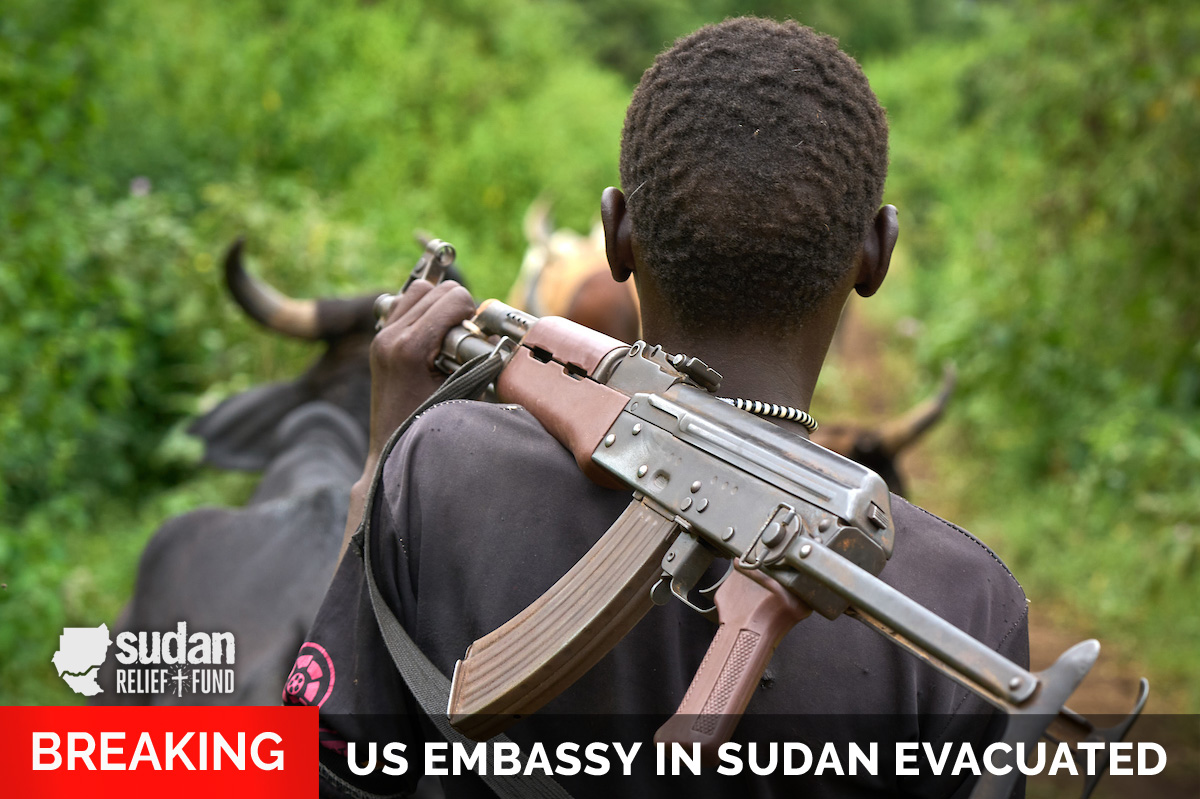
US Evacuates Embassy in Sudan as Fighting Escalates and Conditions on the Ground Deteriorate

Experts Fear Fighting Will Worsen Existing Hunger Crisis

The US and other foreign governments moved quickly this weekend to evacuate their embassies, as ten days of fighting that erupted between government forces and supporters of the previous Sudanese regime created perilous conditions in Sudan’s capital city of Khartoum and other parts of the nation.

A cease-fire that had been sought for a 3-day reprieve to allow local citizens to celebrate a Muslim holiday did not survive the intensity of the clashes between rival generals and their forces. While a number of foreign nations were successful in retrieving their diplomatic staff and employees, many foreign citizens, students, and locals desperate to escape the chaos remain stranded.

Efforts by citizens struggling to flee the country by air, on land by vehicle, or by boat at the Port of Sudan, were hampered by fighting that destroyed at least one runway at the airport and knocked out electricity and internet connections – further hindering communications for rescue and evacuation operations. Thousands of other civilians are bunkered in their homes, attempting to survive with no access to supplies or power.

*Read more about the crisis here

Fear of Famine Worsens

The fighting in Sudan is a humanitarian crisis, and the conflict will have a devastating impact far beyond just the capital of Khartoum.

Relief from world food programs was already cut back to neighboring South Sudan this year, with agencies citing impassable delivery routes and the war in Ukraine as cause for the reductions. With the outbreak of violence in the northern border nation of Sudan, many aid organizations are evacuating as well, leaving civilians left behind with little to no resources.

And with the region already facing a looming famine in the aftermath of consecutive record floods, the current violence and interruption of supply routes could propel the hunger crisis to catastrophic levels. The lethal combination of disastrous flooding, reduced aid, supply interruptions, and fallout from the collapse of order in Sudan’s capital, could put millions at risk of death by starvation.

Watch ABC News Video Here

Sudan Relief Fund is determined to stay with the people through this crisis. For 25 years we’ve remained committed to helping suffering people in Sudan and South Sudan through some of the worst conditions imaginable. We continue to provide essentials like clean water, food, shelter, and medical treatment when others leave. But through the years this has only been possible with your partnership.

Keeping Hospitals Open

Curtailed supplies not only affect food availability. Critical services like hospitals are also hit hard. Wartime is not new to missionary doctor, Tom Catena, and his staff at Mother of Mercy Hospital, who continue to provide the only place of lifesaving medical care in the entire Nuba Mountain region of Sudan.

Tom has served steadfastly through civil and national war, endured bombings, serious illness, isolation, and attempts on his life. He and others on the ground with Sudan Relief Fund are dedicated to remaining here through the turmoil in order to help people in desperate conditions.

What You Can Do

Won’t you please stand with us? Here’s how you can help:

  • Donate to Sudan Relief Fund. We’ve been on the ground through times of peace and times of peril in this region, and are equipped through our partners to deliver help where it is needed most.

  • Pray with us. Join our worldwide network of prayer partners, to pray for Sudan and South Sudan. You’ll receive news each week by email with a specific need or praise to pray about.

  • Share. Please share news of this growing crisis with family, friends, co-workers, and your social media spheres. Together we can do so much to effect positive change and transform the trajectory of desperate people’s lives. Imagine if you were the one in need of help, and how much it would mean to you and your family. #PeaceforSudan

It is the innocent – children, families, pregnant mothers, elderly – who always suffer the most during times of warfare and catastrophe. Sudan Relief Fund has been trusted since 1998 to bring life-changing help and hope to people suffering in this forgotten part of the world. Please help us make a difference during this crisis. Your help is needed right now.

“Helping one of the most severe humanitarian crises today.”

-Ann T.

“Sudan Relief Fund is one of my top charities!” 

-Robert M.

$
 
Dedicate this Donation

Honoree Details

Select Payment Method
Personal Info

Credit Card Info
This is a secure SSL encrypted payment.

Billing Details

Donation Total: $100.00

“Join me in donating to this most needed cause.”

-Larry B.

Abdu

When A Boy’s Broken Leg Turns Deadly

Boys will run and play and inevitably they sometimes break bones. Thirteen year-old Abdu Razak was doing just that when he fell down and fractured his leg.

His parents took Abdu to the El Obeid Hospital in Central Sudan, where he needed an operation to repair and set the bone. While the operation seemed to be successful, it became apparent after some time that Abdu’s leg was not healing as it should.

What no one realized yet was Abdu had contracted osteomyelitis, a serious condition where bacteria reaches and infects the bone. If not stopped, this condition can lead to the loss of a limb and life threatening complications.

Typically, strong antibiotics and surgery to remove all infected bone tissue are required to recover successfully. The victim experiences fever, swelling, fatigue, and pain at the site of the infection.  

“Abdu’s father pulled his son on the back of a three-wheeled tuktuk for nearly 145 miles to reach the facility where he hoped his boy could find help.”

A few weeks after his injury, Abdu’s parents learned about Mother of Mercy Hospital from neighbors who spoke very highly of the facility. Despite the distance and the rugged, muddy terrain, Abdu’s father pulled his son on the back of a three-wheeled tuktuk for nearly 145 miles, to reach the facility where he hoped his boy could find the help he needed.

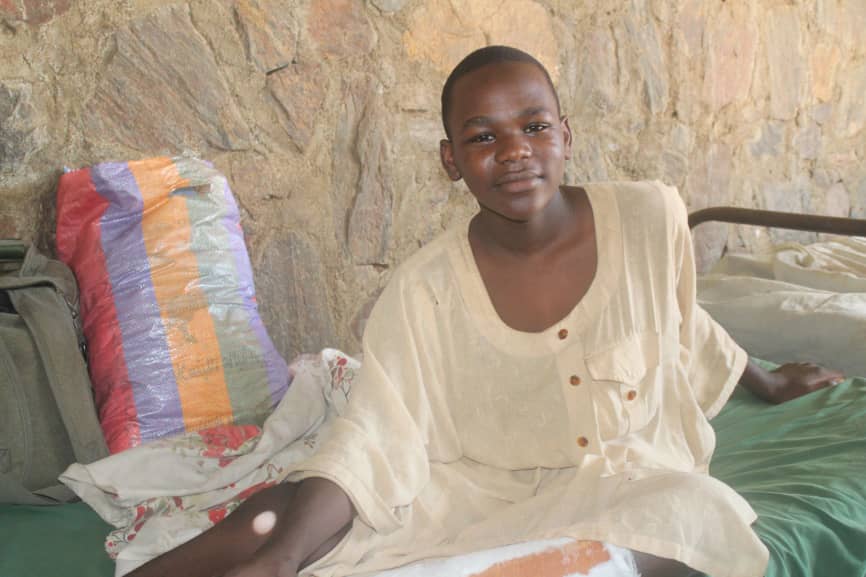
Abdu was admitted to Mother of Mercy Hospital, where he was diagnosed and treated for the condition that threatened his leg and life. He’s undergone two surgeries so far, and is improving greatly. His leg is saved, and happily, Abdu is expected to heal completely. He’s looking forward to getting back to school and resuming a normal teen life.

Both Abdu and his parents are exceedingly grateful to Mother of Mercy Hospital. His parents earnestly thank the staff and supporters of this hospital for saving their son from a far worse fate. Because of the right help at a critical moment, a thirteen year-old boy will soon run and play again, just as young boys should.

These stories are made possible because of your support for Sudan Relief Fund. Thank you for partnering with us to save lives like Abdu’s and so many others.


Would you like to pray for us? Sign up for our email prayer group to receive weekly emails sharing important needs to pray for. You’ll join a faith community around the globe praying to bring hope and help to suffering people in this forgotten part of the world. Click here to find out more.

Writing a New Chapter for South Sudan

Students Walk for Peace in Historic Pilgrimage to Meet Pope

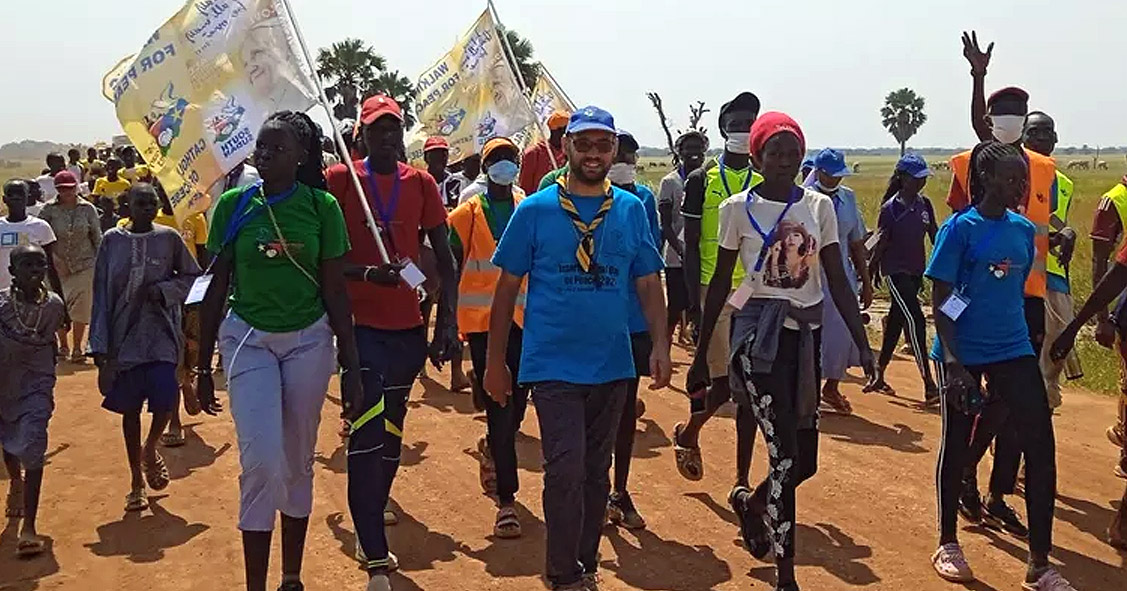
Students from different tribes and regions of South Sudan came together in a nine-day pilgrimage called “Walking for Peace,” a journey led by Bishop of Rumbek, Christian Carlassare, that culminated in the opportunity to greet Pope Francis during his historic visit to the nation February 3-5.

Sixty students ranging from 18 to 20 years old, and 24 support staff, traveled on foot from Rumbek to South Sudan’s capital city of Juba – a distance equivalent to walking from New York City to Washington, DC. Among the support staff was Sister Orla Treacy, Principal of Loreto Schools, a Sudan Relief Fund partner and a leading force for girls’ education in the nation. 

From January 25th to February 2nd, the group walked through towns and villages as a demonstration of unity and peace, a startling and encouraging entourage in a nation that’s been plagued by political turmoil and tribal divides since its independence in 2011.

Bishop Carlassare described the journey as “a beautiful experience of encountering different Christian communities, because every evening…we were praying, celebrating, passing on the message of reconciliation and peace.” He told how each night as they stayed in a different parish, the hosts as well as local people would join their group and come together to pray.

“I think we were the hope, somehow, for all the people who were seeing us, and a hope for the country,” said the bishop. “People responded by joining us…walking together and joining us for prayer. The pilgrimage was really done by hundreds, if not thousands, of people who felt like we need to join together…We felt a common humanity.”

The bishop described the experience’s impact on the students – most who had never been to Juba or traveled that far within their country. “It empowered them and exposed them to the idea that…together we can do great things and bring change. So it was a powerful encouragement and hope for them.”

Pope Francis had heard of the students’ pilgrimage and asked to meet the young people who made the journey. Meeting the students on the steps outside the cathedral in the capital city, he told them, “You are a great witness to me and to the Church. Please continue on this way.” The pope then blessed the students and gave each of the participants a rosary.

The students’ portrayed a powerful message of reconciliation in each town they passed through, by representing a peaceful and diverse group themselves – young adults from different tribes and villages in South Sudan who come together harmoniously each day in pursuit of their studies and a more positive future for their country.

“People were full of joy to see young people — 
who used to fight, marching with guns — instead 
marching with crosses and banners of peace.”

Bishop Carlassare

If children are the future, these young adults are ambassadors for a different South Sudan – a nation whose future is marked by change from its history of divisiveness, and replaced by a yearning for a people who simply see themselves as South Sudanese. 

As Pope Francis said so poignantly to Bishop Carlassare, “Thank you for the witness of these youth; they are writing a new chapter for South Sudan.” Read more about this story here.
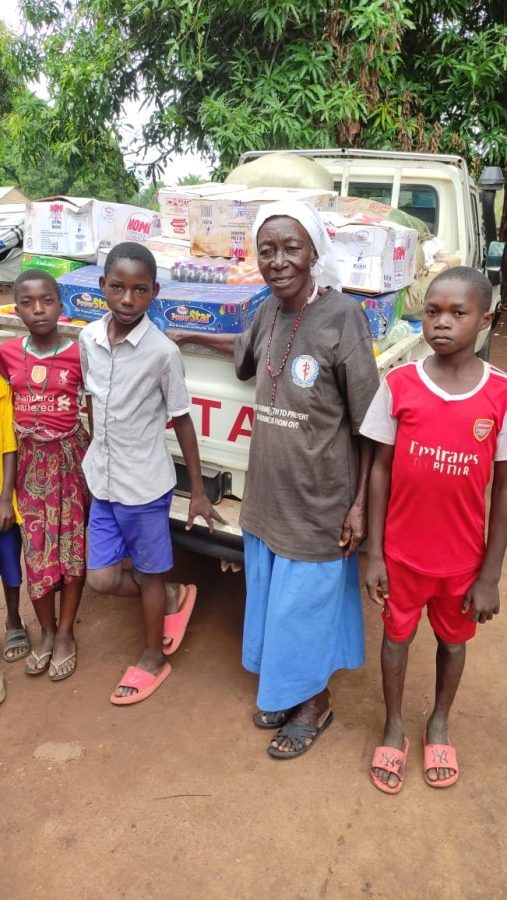
SRF 2023 1st Quarter Newsletter


The Lives You’ve Saved

In Nzara, Vicki is Surviving—and Thriving—Despite HIV

Little Vicky Alison had a rough start in life. Her family was very poor, and her mother died when Vicky was just two years old. She was being raised by her grandmother when outreach personnel from a local organization in Nzara identified Vicky as HIV positive.

The organization partners with Sudan Relief Fund to provide medical and vocational assistance to children born into HIV, who are often ostracized by their communities and left with no means to survive.

Through the support program, Vicky regularly received nutritional support, which is critical to survival for an HIV positive child. At one point a relative took her to a local practitioner known as a witch doctor, who removed Vicky from her antiretroviral meds. Vicky’s condition drastically worsened.

Fortunately, outreach workers checked on Vicky. The organization’s tracing program follows up with patients who have lost March 2023 touch and no longer come in to receive treatment. When they checked on Vicki, they found her almost at the point of death.

Vicky was immediately rushed to St. Theresa’s Hospital, a Sudan Relief Fund supported facility in Nzara. She was treated in intensive care for almost a month. When she continued to decline, she was put on a “last resort” round of HIV medication treatment, which caused disfiguring swelling of her limbs and body.

Somehow this little girl kept fighting back. Remarkably, her health gradually improved. After a long stay, she was discharged from the hospital and moved to a foster home to live under the care of a foster parent associated with the outreach program. Here she is at last thriving in a comfortable and supportive environment.

Vicky can attend primary school now, and she even excels as one of the brightest students in her class. Vicky feels valued and cared for. These days she is often seen running and playing, with a radiant smile across a face filled with hope— all thanks to the miracle of God’s love provided to her through the generous donors to Sudan Relief Fund and our caring partners in the region.


Doing God’s Work Aiding Refugees

Delivering the Tools for a Brighter Future

The Comboni Missionaries have had a presence in South Sudan for a hundred years and have seen it all. Sudan Relief Fund has been funding programs with this extraordinary religious community because of their commitment to the people of South Sudan. One of the missions located in a border town in South Sudan was witness to a brutal conflict which escalated in 2017.

Looking for safety, people there found refuge just across the border in Palorinya, Uganda. To continue their missionary work and to support the people that were now refugees, Sudan Relief Fund provided funding to construct a new mission in Palorinya.

Construction of the mission was completed in 2019. In October of 2022, SRF funded the development of a refugee skill-training center in Palorinya. This funding will be utilized to build halls, purchase teaching materials, and provide teacher salaries for the program.

This newly built skill training center will provide education and economic empowerment to those whose lives have been upended by the ongoing struggles in South Sudan. The goal, ultimately, is to equip them not only with the skill set to provide economic independence but also skills that will facilitate the rebuilding of their communities when they return to South Sudan.

The program will also offer much-needed counseling services to a population that has been ravaged by war, poverty, and famine. The refugee communities include more than 20,000 women, many of whom have been victims of rape and other atrocities.

By providing for the professional, physical, and spiritual needs of these children of God, the Comboni Missionaries – in conjunction with SRF and its donor network – are building the foundation for a brighter future across the region.


Strengthening Educational Building Blocks

Through the Catholic University of South Sudan

Inspired by the values of the Gospel and the social teachings of the church, the Catholic University of South Sudan has delivered invaluable education to the people of the region for over a decade. To date, the university has graduated thousands of students, raising up thousands of virtuous leaders in one of the most corrupt countries in the world.

Sudan Relief Fund has proudly partnered with the Catholic University to meet its ongoing needs and was able to respond to several emergency requests in 2022 to provide critical assistance in multiple areas.

SRF provided funding in tuition scholarships for displaced orphans, single mothers, and other enrollees who have lost their sources of funding due to the worsening economic crisis in South Sudan.

SRF also provided funds to pay—and feed—staff. The University offers feeding programs for its full-time staff because the salary they earn is not sufficient to provide for all of their daily needs.

Funds were also allocated toward maintaining the operational costs of the University, including generator maintenance and repairs, office supplies, utilities, and vehicle maintenance, as well as procuring hygiene and sanitary items and daily necessities for those who board at the school.

Catholic University Vice Chancellor, Fr. Matthew Pagan, wrote, “The Catholic University is delighted to Sudan Relief Fund for supporting us. We wish to express our appreciation for your kind consideration.”


Emergency Relief in the Face of Ebola

Delivering Food, Transport, and Hope to St. Martin de Porres

The congregation of St. Martin de Porres in Nebbi delivers God’s grace by working to assist many of the 1.4 million South Sudanese refugees who fled to Uganda amid the ongoing violence and desperate conditions in their home country. This blessed work faced major obstacles, first with the Covid-19 pandemic and then, in 2022, with the outbreak of fast-spreading Ebola.

Rev. Bro. Samuel Hakim Alberto, Community Superior and Project Manager for the St. Martin de Porres Brothers, reached out to SRF in October. “In this region, deficiency and poverty come every year in differing degrees,” he wrote. “This year has been seeing a more major change. Without the help and support of Sudan Relief Fund, life would be unbearable given the needs of our young children, street children, and orphans.”

“In such conditions, poor families can’t afford to buy food to keep their children healthy and eventually, they need emergency aid and become totally dependent on providential or external help.” SRF was able to provide $25,000 to meet this urgent need. The money was used to purchase food items such as maize, beans, sorghum, rice, cooking oil, salt, and onions, as well as firewood and transport for the refugee camps operated by the Brothers.

Rev. Alberto reports, “The contribution that Sudan Relief Fund has made is real encouragement to the poor children in the region. Your gift has enabled us to carry out the love, care, and compassion of Christ to those in dire distress and urgent need of help.”

“Your support means a chance of health and happiness, perhaps even the difference between life and death. We are greatly humbled and promise always to pray for you that God may always bless the work of your hands.”


SRF 2023 Q1 Newsletter

Download SRF 2023 1st Quarter Newsletter Here

Female Graduate Returns from Medical Training to Serve at Clinic

Racheal Piath is blazing trails for girls in South Sudan as one of the first female graduates to return with a degree in the medical sector.

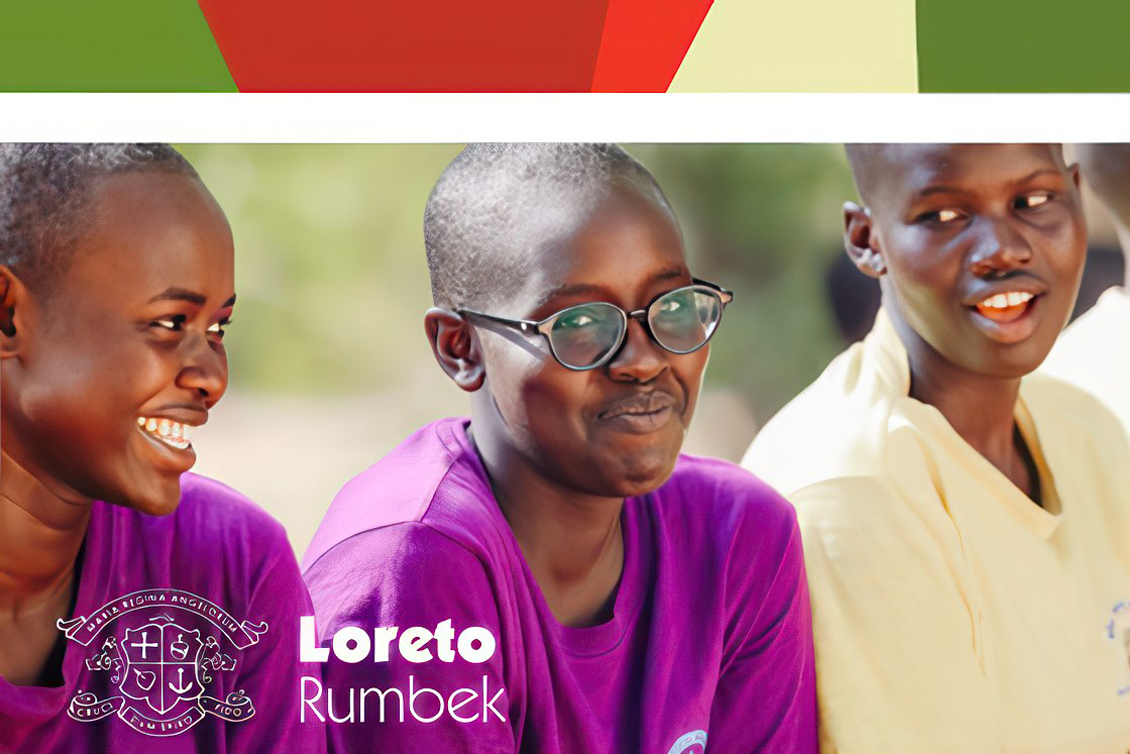
Racheal just completed her higher education to earn a Diploma in Clinical Medicine, and has come back to her alma mater to serve at the Mary Ward Primary Healthcare Center, located on the campus of the Loreto Rumbek School for Girls.

Racheal is an example of an initiative directed by Sister Orla Treacy, Principal of Loreto School for Girls, whose motto is, “In the future, women will do great things.” The school is a catalyst for girls’ education in a country that has traditionally denied females the opportunity for higher education, or nearly any schooling at all.

Typically only 30% of students enrolled in school are girls. Of that group, a scant 2-3% go on to secondary school. It is estimated only 8% of women in South Sudan can read – one of the lowest literacy rates in the world. Tragically, a girl has historically been more likely to die in childbirth here than to finish primary school.

But all that is changing with the pioneering work of Loreto School for Girls. The school recently boasted their first female alumni who became a lawyer, and each year more girls are going on to seek higher education after graduation. The benefits of Sister Orla’s work come full circle when these young ladies return to serve in their home areas, where their skills are greatly needed.

The school’s health clinic is a light to the community, and its services were integral during COVID when the government asked the clinic to remain open, as shutdowns affected nearly all other healthcare services in the area. Initially the clinic saw 1,500 patients a day, but eventually expanded to more than triple their capacity, administering medicine to 5,000 patients daily at the height of the pandemic.

The clinic also sponsors nutritional and wellness programs for new mothers, and outreach programs in the community. Racheal will work at Mary Ward as a Clinical Officer, sharing her skills, and offering inspiration to other girls of what can be achieved with their potential.

Rimaz

Courageous Girl Survives Bandit Attack

South Sudan is a volatile country, and daily life can be just as volatile. Eleven-year-old Rimaz knows this well.

Recently, Rimaz shared her story with Sudan Relief Fund as she sat recuperating in her bed at Mother of Mercy Hospital. She told of the day she joined her uncle, brother, and several others for a walk to a cross-border market, so her uncle could travel from there to Khartoum. A cross-border market is situated on the border between liberated areas of the SPLM (Sudan People’s Liberation Movement) and the government of Sudan.

About an hour after they left their uncle at the border and began to make the trek home, the group was suddenly and viciously attacked by a group of bandits on camels. Gunshots rang out. All four instantly fell wounded, including Rimaz and her brother.

Rimaz had been shot in her arm and the force knocked her to the ground, where she lay semi-conscious with her arm draped across her chest. There was so much bleeding from her wound that it appeared as if her chest were covered in blood, and the bandits took Rimaz for dead.

One particularly gruesome attacker reached down and cut off Rimaz’s ear, still assuming she was dead. In a moment of incomprehensible bravery, Rimaz didn’t flinch or make a sound, knowing it would betray that she was alive and her attackers would surely kill her.

For more than an hour she lay there, drifting in and out of consciousness. Tragically, two friends in their group had been killed instantly. But miraculously Rimaz and her brother – who was also shot in the arm and pretending to be dead – were both alive.

After what seemed like a grueling eternity, Rimaz’s brother felt enough time had passed that it was safe for them to move. He urged his sister to get up so they could find help. But Rimaz was too weak to rise. She could only respond, but she didn’t have the strength to stand.

Rimaz’s brother ran all the way back home, and soon people came to help them get to the nearest medical facility. Because of Rimaz’s extensive blood loss and the wound to her arm, she was redirected to Mother of Mercy, the missional hospital where Dr. Tom Catena and his staff tirelessly serve the vast Nuba Mountain region of Sudan. She was taken in for immediate emergency care.

Since being admitted to Mother of Mercy Hospital, Rimaz has had two surgeries on her arm, and in the excellent care of Dr. Tom and his team, she is recovering well from her injuries. With a radiant smile she says she is feeling much better now. Then her face darkens as she recounts the loss of her friends, and how she feels self-conscious about her injured ear.

But this courageous young girl knows she is lucky to be alive. “I feel very bad for my two friends who were killed, and I feel very ashamed that I have lost my ear,” she expressed. “But I thank God for sparing my life. And I also thank God for this hospital, for the surgery I was able to have, and for them taking care of me.”

These stories of Lives Saved are made possible by your support of Sudan Relief Fund. Thank you for making a lifesaving difference for Rimaz, and so many others who are blessed by your help.


Would you like to pray for us? Sign up for our email prayer group to receive weekly emails sharing important needs to pray for. You’ll join a faith community around the globe praying to bring hope and help to suffering people in this forgotten part of the world. Click here to find out more.

New Life Springing Up in the Desert

Garden Project Grows Food and Hope

Before, hundreds of families here were suffering from leprosy. When they were discovered, they were homeless, dying from illness and starvation, and devoid of hope – continually forced far away from any help society might offer.

But that was before. Today they are beginning to thrive, thanks to the blessings of medical care, shelter, clothing, clean water, and an agricultural project sponsored by Sudan Relief Fund that is bringing new life to a formerly desolate land and people.

It is a story of new beginnings. With the help of Sudan Relief Fund supporters, families received emergency food relief. A clean water well was drilled. New homes providing shelter are being built across the community. A small medical clinic stands on the grounds – a crucial component where residents now receive medicine to stop the progression of their illness. Regular treatments will eventually cure this community from the scourge of leprosy entirely.

Now hope grows here daily, springing up as visibly as the green crops that the fields are beginning to yield. The availability of water and tools to work the fields have given new life to this community in more ways than one. Crops feed the body, while having a purpose like working the ground feeds the soul. Occupational training is helping injured people find gainful ways to support themselves. Children can go to school.

Now the people here think about a future – one not filled with despair, but with potential. A potential the leper colony of Malou never thought they would have.

Your help is making this possible, and your support is transforming lives in the most literal sense. Thank you for standing with us until the day the leper colony of Malou is no longer a leper colony at all – just the community of Malou, with people tending their fields and raising their families.

“’…the desert will become a fertile field, and the fertile field will bring forth bountiful crops.”

– Is. 32:15